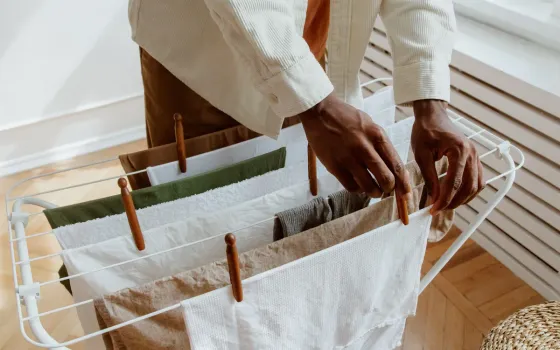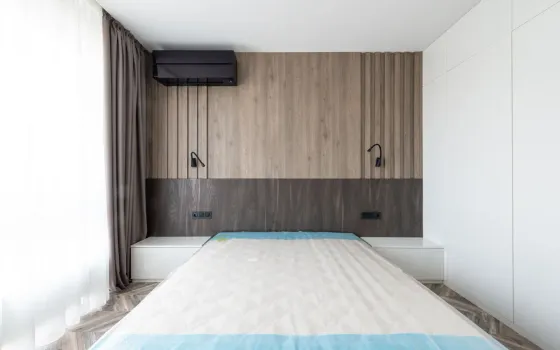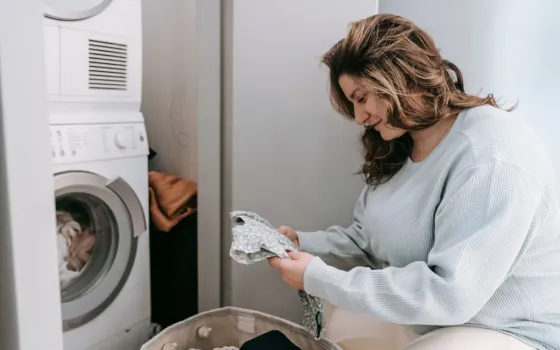
Living alone doesn’t mean washing the bedding less often. A mattress without a cover still wants a weekly vacuum whether one person sleeps on it or it’s one of four beds in a shared house. Who lives where changes who does each job and how the total time gets divided up. It doesn’t touch how often a job with a hygiene reason behind it needs doing. The one thing that does move those frequencies, by more than headcount ever manages, is how hard the water is where you live.
Two different questions people mix up
“How much cleaning does my flat need” and “how often does each job need doing” sound like the same question asked two ways. They aren’t. The second one is a fact about dust mites, limescale and bacteria, and none of those care how many names are on the tenancy agreement. The first is about total minutes per week, and that genuinely does scale with how many people are generating washing-up, laundry and dust. Keeping those two apart is really the whole point of this piece. Blur them together and a solo flat starts to feel like it barely needs a routine, while a four-person house starts to feel like the rota should run four times as long. Neither holds up. The weekly cleaning schedule built for two working adults already lays out the full tiered list and where each frequency comes from. This piece is about what happens to that same list once the headcount stops being two.
What doesn’t change with headcount
Bedding is the clearest case. Allergy UK’s factsheet on house dust mites says bedding without barrier covers needs washing weekly, and specifically that “Washing at 60 degrees centigrade or above will kill mites”. That’s true for a single bed slept in by one person just as much as a couple’s bed, or any one of a houseshare’s five separate beds. Dust mites build up from skin cells and warmth, not from how many names are on the lease.
The mattress works the same way. I didn’t know this until I looked it up, but Cambridge University Hospitals’ NHS guidance is specific: “If you do not have mattress covers vacuum the mattress once a week”. One person’s single mattress and a shared house’s four mattresses both follow that rule, just applied once per mattress rather than once per flat. Kitchen cloths, the bathroom’s weekly clean, fridge shelves going monthly: every job on the tiered list that exists for a hygiene reason keeps the same frequency whether the flat holds one occupant or five.
What does change with headcount
Usage scales up, though, and that’s a different thing from hygiene frequency. A four-person flat produces more loads of washing, more dishes, more kitchen traffic, and bins that fill faster, which can push some jobs to happen more often in practice even though the underlying rule hasn’t shifted at all. A kitchen bin that would sit half full for three days in a one-person flat might need emptying twice as often with four people cooking in the same space. That’s a volume effect, not a change to the stated weekly or monthly rule.
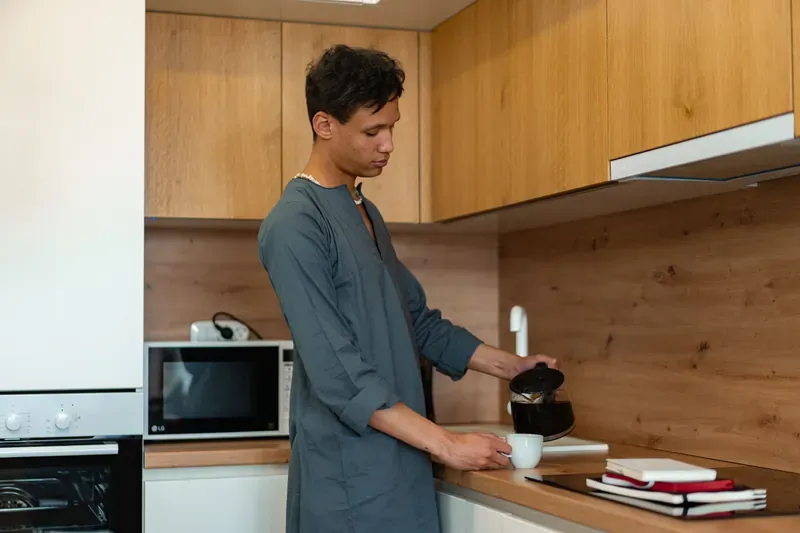 Photo: Mikhail Nilov via Pexels
The other thing that changes is who does the work, not how often it happens. Living alone, every job on the weekly tier lands on one person, full stop. The two-working-adults schedule puts a shared weekly tier at 45 to 60 minutes per person once it’s split between two. Solo, that same tier isn’t split at all, so it runs closer to 90 minutes to two hours done in one sitting, still exactly the tier as written, just undivided. In a three- or four-person house, the same weekly list gets shared between more people and each person’s share shrinks, though working out who actually does what tends to take a bit more talking through than it does between two.
What changes with hard water instead
Hard water is the variable that moves descaling frequency, and it moves it by a meaningful amount, roughly a season’s difference between a hard-water area and a soft one, not a headcount-driven one. Descaling a kettle, tap and shower head sets out where that figure comes from, including Thames Water’s guidance on checking how hard your local water is and the Russell Hobbs kettle manual’s warning that scale damage is excluded from the guarantee, which only matters because a hard-water kettle scales up fast enough to make that exclusion relevant in the first place.
A single person living alone in a hard-water postcode descales their one kettle on roughly the same monthly interval as a four-person household in the same postcode descales theirs, because the water is doing the damage, not the number of hands reaching for the kettle. Move that same person to a soft-water area and the interval stretches out regardless of how many people live there. Headcount barely touches this number. The postcode decides it.
Living alone, in a flatshare, or somewhere in between
Put the two variables together and a living-alone cleaning schedule ends up looking almost identical to a shared one, line for line, with two differences: nobody else is doing half of it, and the total weekly time sits in one block rather than split across two or more people. A flatshare’s version of the same list divides by headcount and needs a rota, or at least a rough verbal agreement on who takes which tier, which the two-working-adults piece already covers in detail. Housemates never have to renegotiate how often any individual job happens. Dust mites, limescale and bacteria settled that question long before anyone moved in.
Using the tool
Working this out by hand every time a living situation changes is more arithmetic than it needs to be. The cleaning schedule generator takes two inputs, household size and whether the water’s hard, and returns the tiered list already adjusted: the hygiene-based frequencies stay fixed, the hard-water-dependent jobs shift interval if the water’s hard, and the weekly tier comes back split evenly across however many people are listed. The reasoning behind each tier, including the full list for two people, is in the weekly cleaning schedule, and everything else in the category sits in cleaning.