Shop in aisle order and you stop doubling back on yourself, which is the obvious benefit and the one everyone already knows. There’s a second reason, though, and this one comes with a real number behind it. Chilled and frozen food picked up early in a shop sits in the trolley for longer before it sees a fridge again, and the FSA’s guidance on chilling food turned out to be stricter about that window than I’d assumed until I checked it.
The obvious reason: no backtracking
A list jotted down in whatever order things come to mind bears no resemblance to the shop itself. Bread sits next to milk on the list because that’s how the fridge at home is arranged, not because the two are anywhere near each other on the shelves. Follow a list like that and the route loops back on itself. Items get missed because they were never close to wherever your eye landed, and the whole trip takes longer than the length of the list suggests it should. None of that comes down to how long the list is, either. A short list in the wrong order can take longer to get through than a long one in the right order. It’s the order that causes that, not the item count.
A list that’s already in shop order gets followed more closely, too. Hunting back and forth for the next item on an unsorted list means walking past the same shelves twice, and that’s precisely when an extra, unplanned item ends up in the trolley. Working through a list once, start to finish, in the order the shop is laid out, cuts that right down. It isn’t really about willpower. There’s just less reason to stop in front of a shelf that isn’t on the way to anything else on the list.
The reason with an actual number behind it
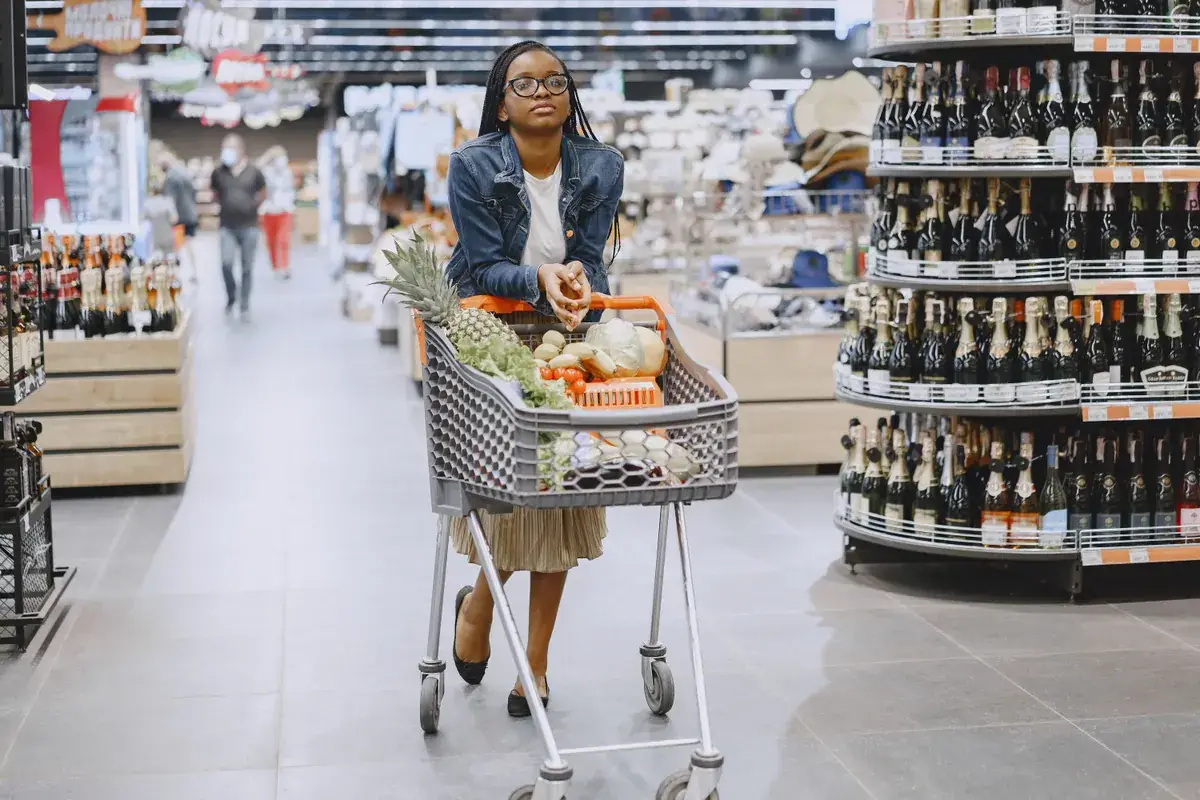
The second reason has nothing to do with speed and everything to do with temperature. The FSA sets this out specifically: chilled food should spend the shortest possible time out of the fridge during preparation, and never more than four hours. I’d always taken that as a cooking rule, the sort of warning about not leaving raw chicken out on the side too long before it goes in the oven. It turns out the same rule covers the shop itself, not just the kitchen afterwards. A pack of chicken picked up at the start of a 25-minute shop, then hauled round every aisle still left before the till, has already used up a chunk of that four hours before it’s even been paid for, and there’s still the walk or drive home and the unpacking to come.
The same guidance also gives the temperatures that four-hour figure is built around: a fridge kept between 0 and 5°C, a freezer around -18°C. A trolley sitting at room temperature for half an hour is nowhere near either of those, which is exactly why the order chilled and frozen items go into the trolley matters for more than just convenience.
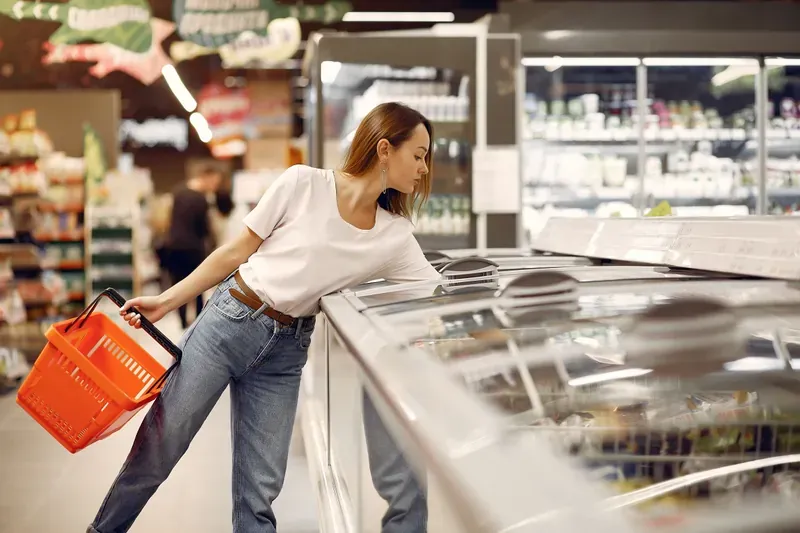 Photo: Gustavo Fring via Pexels
The order that makes sense
Put the two reasons together and a sensible order emerges: tins, dry goods and anything shelf-stable first, since none of it cares how long it spends in a trolley; fresh fruit, veg and bakery next; dairy, eggs, meat and fish after that; frozen last, as close to the till as the shop’s own layout allows. The weekly shop built around five dinners already follows this exact order on its own fixed list, running from fruit and veg through to the freezer aisle right at the end, for the same two reasons covered here. The difference with a personal list is that it rarely turns up already sorted that way. It gets written in whatever order thoughts arrive, not the order the shop is laid out in.
A bit more detail is worth knowing within that broad order. Dairy and eggs sit in the same temperature bracket as meat and fish for this purpose, so they’re worth picking up together rather than grabbing dairy early and meat late just because they read as separate categories on a list, even though a fridge treats them identically once they’re home. Bakery items are shelf-stable enough to go earlier, alongside the tins, if the rest of the list leans frozen-heavy and there’s a reason to get the cold items moving faster. None of this needs to be exact. Roughly right beats precisely right here: chilled and frozen go last, and everything else can fall wherever suits the shop’s own layout.
What doesn’t need sorting
Household items, toiletries and anything else with no temperature sensitivity don’t need to fit into this logic at all. They can sit anywhere on the list without touching either reason above, aside from the backtracking one. Treating every item as equally important to place correctly is more effort than the system is worth. Really, only two kinds of item matter here: the shelf-stable ones, where order doesn’t matter, and the temperature-sensitive ones, where it does.
Using the tool
Sorting a list by hand every week, from memory, for whatever happens to be on it that particular week, is exactly the sort of small repeated task that’s quicker handed off than redone from scratch each time. That’s what the shopping list organiser is for: paste or type a list in and get it back sorted. It groups items the same way the five-dinner list already does: fruit and veg, bakery, dairy and eggs, meat, fish, frozen, and tins and packets, so chilled and frozen items land at the end of the list rather than the start of the trolley. The reasoning behind how long food keeps once it’s home is a separate piece, worth reading alongside this one, since the one-to-two-hour and four-hour windows described there are exactly what the shopping order is protecting, counted from the till rather than from the moment the front door shuts. The rest of what keeps a weekly shop efficient sits in the meal planning section.