Getting five weeknight dinners out of one weekend shop is a question of order. The fragile things (fish, salad, fresh herbs) get cooked first, the sturdy things (root vegetables, hard cheese, eggs) wait until midweek, and Friday is something from the freezer or a tin. Plan it that way and nothing sits going limp in the fridge while it waits, and there is no Wednesday top-up trip. That is the entire method. What follows is the list and the timings.
The rule that makes it work: fragile first, freezer last
Most weekly plans collapse around Thursday, and the reason is that people write a list of meals when what they need is a sequence. The fish gets bought on Saturday and pencilled in for Thursday because Thursday somehow felt like a fish day, and by Thursday evening nobody wants to open that packet.
So write the week in the order each main ingredient stops being good. Fresh fish and bagged salad belong on Monday and Tuesday. Chicken, peppers, mushrooms and broccoli will hold until midweek. Potatoes, onions, carrots, cheddar and eggs are still perfectly fine on Thursday. Friday is a tin or the freezer, which makes it the one meal you could still cook even if every other part of the week had gone wrong. I liked that more than I thought I would. The plan has its own fallback built in, and the fallback turns up on the same day every week.
For the freezer, a single line from the FSA settles it: use food within 24 hours after it’s been fully defrosted. That means Friday’s frozen dinner moves into the fridge on Thursday night. Wednesday would be too early.
The shopping list, grouped by supermarket aisle
I’m assuming the cupboard already has the boring basics in it: pasta, rice, tinned tomatoes, chickpeas, stock cubes, oil and a couple of jars of spices. If it doesn’t, start with the pantry list for weeknight cooking, because the weekly shop below is fresh food only.
This is the list, grouped more or less the way most supermarkets set out their aisles:
- Fruit and veg: a bag of salad leaves, one cucumber, two peppers, a head of broccoli, a pack of mushrooms, a bag of carrots, a bag of potatoes, two onions, one lemon and a bunch of spring onions.
- Fish counter or chiller: two white fish fillets and one pack of smoked mackerel or salmon.
- Meat chiller: one pack of chicken breasts or thighs.
- Dairy and eggs: a block of cheddar, a pot of natural yoghurt, six eggs, and butter if the current block is running low.
- Bakery: a loaf or a pack of wraps.
- Freezer aisle: a bag of peas if the old one is nearly finished, and a bag of frozen fish or a pack of frozen veg for Friday.
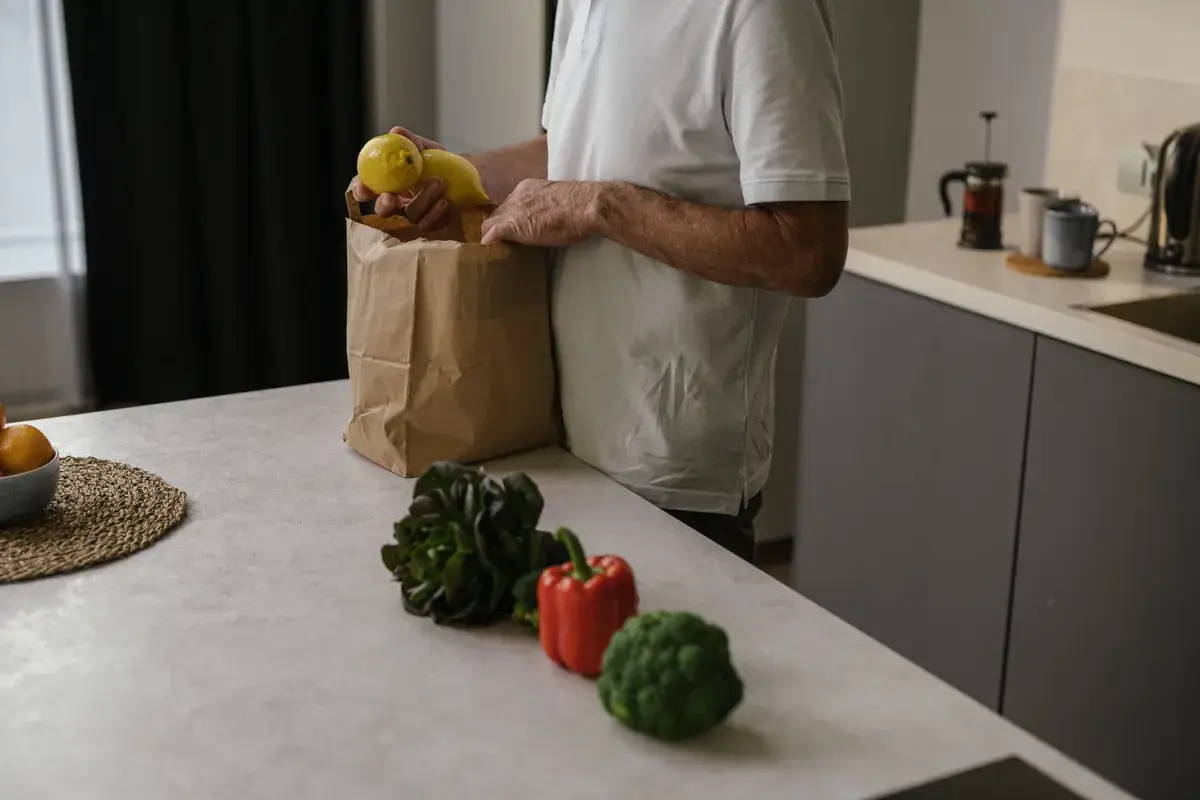
It comes to about twenty items, which fills two bags. Because the list already runs in the order things go off, it is also the plan. There is no second list to write.
 Photo: Yaroslav Shuraev via Pexels
Monday to Friday, with what to do with the half-used items each night
- Monday: white fish, salad, new potatoes. Nothing in the bag is more fragile than the fish, so it goes first. Pan-fry or bake the fillets with a bit of lemon. Use half the salad and half the cucumber, and put the rest of the salad back in the fridge in its own bag with the air squeezed out.
- Tuesday: smoked mackerel or salmon with the rest of the salad, spring onions and a jacket potato. This finishes the salad before it wilts. Two fish dinners on consecutive nights also line up with the Eatwell Guide, which says to aim for at least 2 portions (2 x 140g) of fish every week, 1 of which should be oily. The smoked fish is the oily one. I didn’t know smoked mackerel counted until I looked it up.
- Wednesday: chicken with roasted peppers, broccoli and rice. Peppers and broccoli are fine for three days. Any chicken breast left over goes in the fridge for Thursday and needs eating inside the 48 hours the FSA gives leftovers.
- Thursday: mushroom and pepper omelette, or a chicken and mushroom pasta if there was chicken left. By now the mushrooms are on their last good day. Mix the yoghurt with the lemon for a quick dressing on the leftover cucumber.
- Friday: frozen fish or a chickpea and tomato curry from tins, with carrots and the remaining onion. Everything in this meal would have kept for another month. If the week slipped and an earlier dinner got skipped, Friday’s food is still there waiting.
Any cheddar, eggs, carrots, potatoes and onions left at the end carry over into next week, which is exactly why they sit at the sturdy end of the list. The extra chicken breast from Wednesday is also what a packed lunch that needs no reheating is usually built from, rather than buying anything separately for it.
The fridge check before you shop
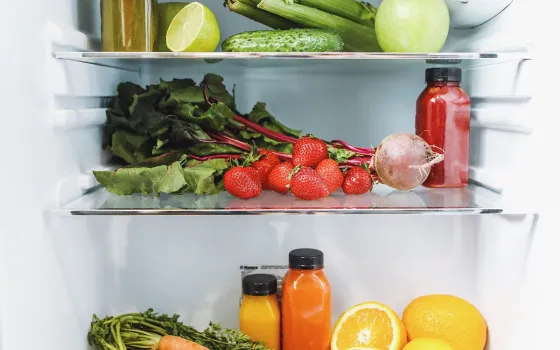
There are two things to do before writing the list. The first is to look at what is already in the fridge, so you don’t come home with a second half-used jar of pesto. The second is to check the fridge itself. The FSA says a fridge should run between 0 and 5°C, and the only way to know is a fridge thermometer, read once a week. This was the bit that surprised me. The dial marked one to five on a rented fridge says nothing about temperature, because those numbers aren’t degrees. A cheap thermometer on the middle shelf does, and every timing in this article assumes the fridge is inside that range.
The same guidance puts a limit of four hours on chilled food being out of the fridge while you prepare it. On shopping day that clock starts at the till, so the fish and chicken go away before anything else is unpacked. The tins can sit on the floor for a while.
Portions that stop you overbuying
Half of “the food went off” is really “I bought too much”. The simplest fix is the British Nutrition Foundation’s hand-based portion guides, which work in the supermarket with no scales: a chicken breast is about the size of your whole hand (120g), a baked potato is about the size of your fist (220g), and a portion of cheddar is about the size of two thumbs held together (30g). Two thumbs of cheese is less than most people cut. I would have cut more than that without a second thought.
The list above is sized for two, which fits anyone who has moved in with a partner and is cooking together for the first time. For two people, one pack of four chicken breasts covers two dinners, and the other pair goes in the freezer on shopping day. A 2kg bag of potatoes at 220g each gives roughly nine jackets, enough for two people across a fortnight of Tuesdays. The 2 x 140g fish target is also why the list has two fillets and one pack of smoked fish, where a family pack of either would be too much.
Living alone, halve the fresh list and freeze the second fillet and the second two chicken breasts on day one; the order of the week doesn’t change. In a flatshare where everyone cooks for themselves, each person can follow the order, but the shared shopping list stops working: three bags of salad in one fridge means three bags going off at the same time. It’s the same thinking as a cleaning rota for two working adults. The decision gets made once, at the weekend, and nobody has to make it again at 7pm on a Wednesday.
What to do if you shop on a Wednesday instead
Any starting day works. What matters is the order, not the names of the days. Shop on Wednesday and the fish is Wednesday and Thursday, chicken and peppers fall over the weekend, eggs and mushrooms land on Monday, and the tin or freezer dinner is Tuesday.
There is one adjustment. With a weekend in the middle, eating out or ordering a takeaway becomes more likely. If that seems probable, drop a sturdy meal and keep the fragile one. Cook the fish and let the omelette wait, since eggs are in no rush.
For more of this kind of thing, the rest of the meal planning section covers cooking for one, which foods freeze well and what to do with the reduced shelf.