Most cooked leftovers last 48 hours in the fridge, full stop. Meat has an earlier deadline bolted onto that: it needs to be cooled and put away within 1 to 2 hours of cooking, not whenever you get round to it before bed. Rice and eggs are stricter again, and not because either one has been sitting around any longer than anything else.
The 48-hour rule, and the temperatures it assumes
That baseline comes straight from the FSA: eat leftovers within 48 hours or freeze them if you think this won’t be possible. It only holds, though, if the fridge is actually doing its job. The same guidance sets out the range it should sit in: your fridge should be between 0 and 5°C, and your freezer should be around -18°C. A fridge running warm, whether because it’s crammed too full or the door seal has gone, quietly shortens every figure that follows, and nothing on the appliance tells you that’s happening.
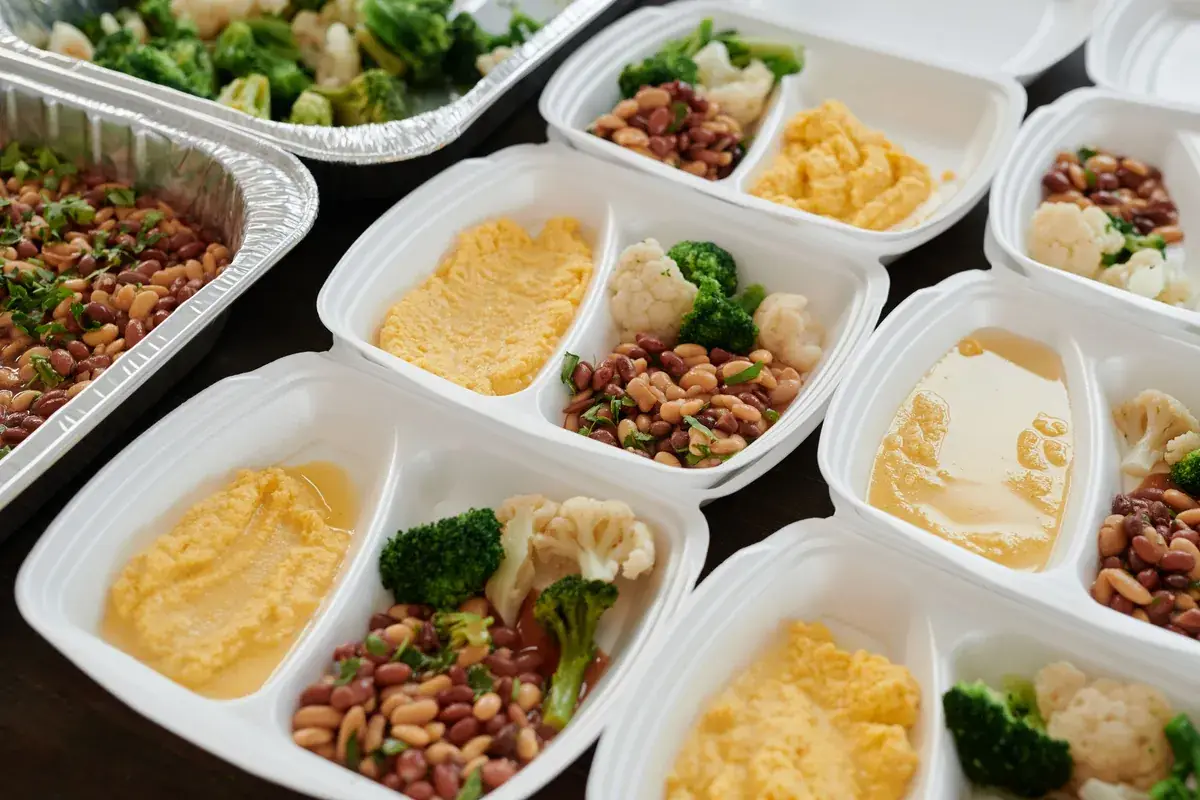
Treat the 48 hours as a ceiling, not a target to aim for. A dish split into smaller containers as soon as it’s made, rather than left whole in one big pot, cools faster and is far easier to judge honestly on day two than a single large dish you’re eyeballing and hoping about. That habit matters more than it sounds like it should. The entire point of putting a number on this is to swap a guess for a fact, and the guess creeps straight back in the moment a container gets opened, poked at, and left on the side for ten minutes while you work out what to eat it with.
Why cooked meat gets an extra step
Most cooked dishes just need to get into the fridge at some sensible point. Meat is fussier about the timing: when you have cooked meat and you’re not going to eat it straight away, cool it and then put it in the fridge or freezer within 1-2 hours. That window is about how fast it cools, not about where it ends up afterwards. A roast chicken left on the side past that point has already had its risk decided before it ever reaches the fridge, and putting it away late doesn’t claw that back. Once it is chilled, it falls under the same 48-hour fridge window as everything else.
The reason meat needs this extra step, and other cooked dishes don’t, comes down to the temperature range it passes through on the way down. Food cooling slowly on the counter spends longer sitting in the zone where bacteria multiply fastest, and meat is simply a more hospitable environment for that growth than a dish that’s mostly vegetables or grains. Splitting a roast, or a big batch of bolognese, into smaller portions before it goes in the fridge is what gets it through that range inside the 1 to 2 hour window, the same logic I covered for batch-cooked dishes going into the freezer: a shallow dish or several smaller tubs shed heat far faster than one deep pot left to cool as a single lump.
 Photo: Jessica Lewis via Pexels
Rice and eggs: the two exceptions already on this site
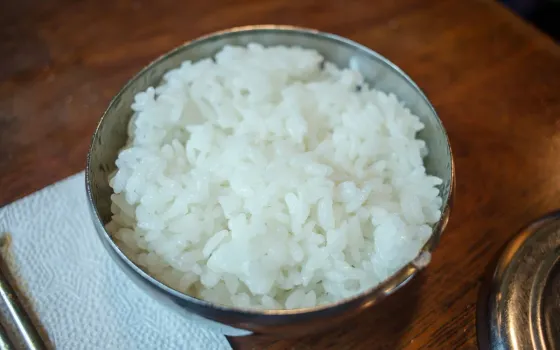
Two foods play by their own rules entirely, and both are covered in full elsewhere on this site, so I’ll give the short version here rather than repeat the whole thing. Rice is stricter on every count. Chill it within one hour rather than the usual 1 to 2, keep it in the fridge for no more than one day instead of 48 hours, and reheat it once, never twice. The reason is specific to rice: uncooked grains can carry spores that survive cooking and then produce a toxin at room temperature, one that reheating does nothing to destroy. The full detail, including the freezer version of the same rule, is in is it safe to reheat rice?
Eggs run on yet another clock, one that starts at the point of lay rather than the point of cooking. That’s a different question entirely from how long a cooked egg dish like an omelette keeps once it’s made, which just follows the ordinary 48-hour leftovers rule like anything else. The egg-specific exception is about raw eggs still in the shell, and I’ve covered that separately in can you eat eggs past the best-before date?
Freezing it instead, and for how long
If 48 hours, or rice’s single day, isn’t realistic, the freezer resets the clock, provided the food goes in without hanging about: leftovers and homemade goods should be frozen as soon as possible. Once it’s frozen, different categories keep for different lengths. Meat dishes are best eaten within 2-3 months, while baked goods, fruit and veg are best between 3-4 months. None of this is about the food turning unsafe past those windows the way it would in the fridge. A freezer pauses things rather than slowing them down, but quality and taste still drift, and that’s the practical reason these figures exist at all.
Once it’s defrosted, the clock resets
Taking something out of the freezer starts an entirely new clock of its own. The guidance is direct about it: it’s also important to use food within 24 hours after it’s been fully defrosted, and the safest route there is to defrost food in the fridge so that it doesn’t get too warm rather than leaving it out on the side. One detail genuinely surprised me, since I’d assumed a flat “never refreeze” rule applied across the board: you can freeze food again once cooked, but you’ll only be able to reheat it once after that. So you can defrost it, cook it, refreeze it, and reheat it once more after that. What you can’t do is defrost it, reheat it, and then reheat it again.
Using the tool
This is exactly the sort of thing I end up looking up mid-cook: standing over a container trying to remember whether it went in on Tuesday or Wednesday. The food storage lookup turns that into a quick reference instead of a guess. Pick what’s in the fridge or freezer and it gives you the fridge window, the freezer window, and which rule it follows, with rice and eggs treated properly rather than lumped in under the 48-hour default. It won’t tell you whether a specific container still looks or smells right; that judgement is still down to you. What it replaces is the harder part: remembering which number applies to which food in the first place. The rest of what keeps a kitchen running without guesswork is in the meal planning section.