Yes, for a couple of days, provided you cook them well. The Food Standards Agency’s consumer guidance says eggs “are safe to eat for a couple of days after the best before date if they are cooked well”, and by cooked well it means the white and the yolk are both cooked through (GOV.UK, home food fact checker). Picture getting back from the bank holiday weekend at Notting Hill Carnival to find the date on a box of eggs ran out while you were away. The obvious move is to bin the lot. I would have assumed the same thing, that a lapsed best-before meant the eggs had gone off. Within limits, the FSA’s guidance says they haven’t.
The short answer
Eggs a couple of days past the date are fine if you cook them properly, which means white and yolk done through and nothing runny. The law caps the date at 28 days from the day the hen laid the egg, so there was never much slack in it to start with. Catering businesses get a stricter rule from the FSA, which I come to below, and if you are in a higher-risk group or planning to serve anything raw or lightly cooked, I would follow that one instead. Ordinary cooking at home falls under the consumer rule above. And if the date is today or later, the shell is clean and uncracked, and the box has the Lion mark, the eggs are good for anything, runny yolks included.
That’s the answer. Everything after this is the reasoning, plus how to stop it happening again. One box of eggs is cheap. Binning six every few weeks is not.
Why eggs are the exception
With most things in the fridge, best-before means the food may not be at its best after that date, and the government’s labelling advice says to trust your eyes and nose. The full use-by versus best-before split is in the reduced-to-clear article. Eggs are different because the risk is salmonella, and salmonella has no look or smell. An egg past its date is identical to one inside it.
The FSA’s catering advice, updated on 20 August 2026, is tougher than what it tells the public. Caterers are told not to use eggs past their best before date at all, to “not use eggs that are cracked, damaged or dirty”, to “keep eggs away from other foods”, and to “store eggs in a cool, dry place, ideally keep refrigerated until use” (GOV.UK, advice for catering businesses). The “no exception” line is aimed at businesses that can’t risk a complaint. The handling points, though, make just as much sense at home, and none of them takes any effort. Plenty of people still keep the box next to the kettle anyway.
What the numbers on the shell actually say
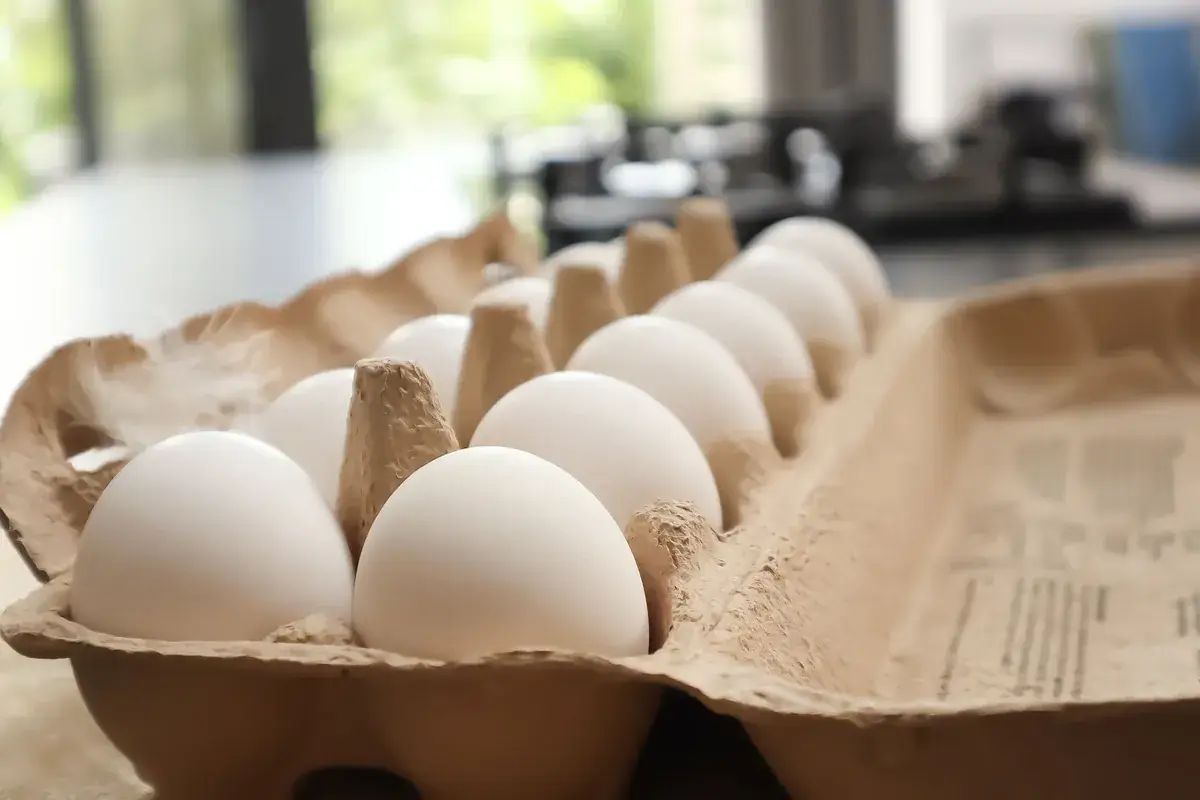
I had never properly looked at the stamp on an egg until I read up on this. The egg marketing rules require each one to carry a producer code: first “a digit (0 for organic, 1 for free range, 2 for barn or 3 for cage) to show the farming method”, then “a code to show the country of origin”, then “a unique identification number” for the farm (GOV.UK, egg marketing standards). So 1UK at the start means free range and laid in the UK. A 3 at the front means a caged hen, whatever the pictures on the box suggest.
Those same rules set the date. The best-before is “maximum of 28 days from date of lay”, and that’s the figure worth remembering. Four weeks from the hen, and a chunk of them has already gone on transport and shelf time before the box reaches your basket. The date marks the end of that window. It isn’t where a grace period begins.
 Photo: Klaus Nielsen via Pexels
Where the box should live
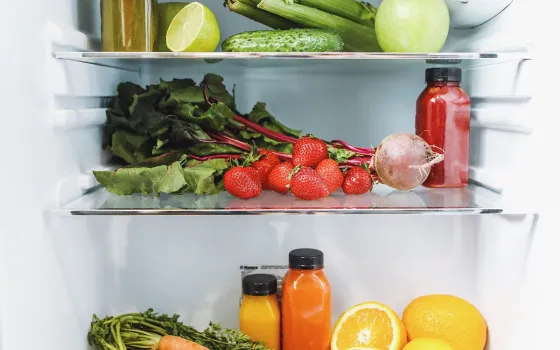
The fridge. The British Lion scheme’s storage page says to “store eggs at a constant temperature below 20°C” and that “the fridge is the best place to keep them in domestic kitchens” (Egg Info, egg storage). A small flat’s kitchen in late August can’t be relied on to stay below 20°C, and once the oven is on it isn’t even close. Constant is the word doing the work in that sentence. Eggs don’t do well going warm, cold, then warm again, and a box on the worktop goes through exactly that every time it gets moved about.
The page makes two smaller points as well. Leave eggs in their own box, since that’s where the date is printed, instead of moving them to the rack in the fridge door, where the date is lost and the temperature jumps whenever the door opens. And “take them out of the fridge half an hour before cooking for the best results”: a cold egg can crack when it hits a hot pan, and in baking it doesn’t bind as well. Half an hour is roughly how long most of us spend deciding what to eat anyway.
There’s a boring reason a box in the fridge stays in date, which is that you can see it. Eggs are one of the things that carry over from one week’s shop to the next, and a box you notice every time you open the fridge gets used by Tuesday. One on the side gets found a fortnight later.
Runny or cooked through: who it matters for, and what changed in August
For most adults, a runny yolk from an in-date British egg is fine. The FSA says “young children, pregnant people, older adults and those with an underlying health condition” can “safely eat raw or lightly cooked hen eggs”, on the condition that the eggs “have a British Lion mark” or come from the Laid in Britain scheme. If neither mark is there, the FSA tells those groups to cook the eggs through.
What changed in August is where the risk turned up. On 27 August, UKHSA and the FSA put out an update on a Salmonella outbreak linked to imported eggs, with cases “associated with eating out at small cafés, restaurants, and takeaway businesses” and samples running from August 2025 to August 2026 (GOV.UK, Salmonella outbreak update). People in the vulnerable groups who are eating out are advised to “ensure they’re thoroughly cooked and to avoid dishes containing raw or lightly cooked egg, such as mousses, fresh mayonnaise or hollandaise sauce”. So this is more a food-stall weekend problem than a home kitchen one. The in-date, Lion-marked egg you crack at home is the safer bet, which I found slightly surprising.
There’s one more line in the FSA advice that applies at home: “serve egg dishes straight away, or cool them quickly and keep chilled”. A frittata left on the side overnight is not the same as one that went into the fridge, and only the fridge one is something I would eat cold the next day.
What I do with a box that is nearly out of date
Eat it. A box with two days left is six eggs’ worth of dinners: an omelette, egg fried rice made from whatever is in the fridge, or a frittata that does lunch for two days. Boil and peel a few and they go in a packed lunch. If the date is tomorrow and nothing is planned, I would cook all six tonight and chill the cooked ones, rather than rediscover the box on Thursday.
I wouldn’t bother with the float test, the idea that an egg which floats has gone off. The FSA is blunt here: it does not recommend using the float test to decide whether eggs are safe, “as it assesses age, not safety” (GOV.UK, home food fact checker). Older eggs float because air gets in through the shell over time, and that says nothing about whether they are still safe to eat. The date and the cooked-well rule are the checks that matter. The meal planning section covers the rest of eating well on a small budget, and most of it comes down to one habit: keep food where you can see it, and use the oldest first.