Reduced-to-clear food only saves you money if you eat it or freeze it before its use-by date, and that date is usually today. So every yellow-sticker item needs a destination before it goes in the basket: eat tonight, freeze before midnight, or leave it where it is. Check which kind of date is on the label, keep the bag cold on the way home, and write on anything heading for the freezer. The detail is below, and most of it comes from two gov.uk pages.
Use-by versus best-before, and why it decides everything on the reduced shelf
Reduced food has one of two dates on it, and they don’t mean the same thing. Gov.uk’s labelling guidance treats use-by as a safety date and is blunt about it: eating food after the use-by date could make you ill. Best-before is about quality. After it, the food is usually still safe to eat, though the taste or texture may have slipped a bit.
Most of what’s on the reduced shelf is use-by food. That is exactly why the shop marked it down, so the deadline is real. The same page also has the exception that makes yellow-sticker shopping work at all, and I wouldn’t have guessed it: food can be eaten after its use-by date if you cooked or froze it on or before that date. If you do cook it in time, the page says to cool it, keep it in the fridge, and eat it within 48 hours or freeze it.
So stop asking “is this a bargain” and ask “will I cook or freeze this by midnight” instead. If the answer isn’t yes, the price is beside the point.
Best-before items are the easy end of the shelf. Pasta, cereal or a jar of sauce marked down for a close date will be fine for weeks afterwards, and they don’t need a plan.
The three buckets: eat tonight, freeze before midnight, leave on the shelf
Do the sorting at the shelf. Put it off until you’re home and a bag of bargains tends to turn into a bin of bargains.
Eat tonight. One item, two at most. A pack of fish or a cut of meat takes the place of whatever dinner was going to be. It has to work with what’s already in the cupboard. If it means a second trip to the shop, you’ve bought an errand, not a meal.
Freeze before midnight. Meat, fish, bread, hard cheese and butter belong here. The FSA says you can freeze food right up until midnight on the “use by” date printed on the label. Realistically these packs should be in the freezer within an hour of getting in, while it’s still their use-by day, which gives you plenty of margin. The real limit is space. A standard fridge-freezer drawer takes four or five flat packs, so work out what will fit before you pick anything up. In a shared house where you have one drawer, that number is your ceiling, and a bargain with nowhere to go isn’t a bargain any more.
Leave on the shelf. Whatever fails the first two tests stays here. Once tonight’s dinner is sorted and the drawer is full, the rest of the shelf is not your problem, however cheap it looks. On paper this is the bucket I’d find hardest, and it gets harder still if you’re shopping with a partner who has just seen the salmon.
What is worth buying reduced, and what to skip
Buy:
- Meat and fish on their use-by day, for the freezer. Most of the reduced shelf’s value is here.
- Bread, sliced and frozen the same day. It toasts straight from frozen.
- Hard cheese, which freezes fine for cooking, and butter, which freezes well.
- Best-before dry goods at any discount, since they don’t need a plan.
- Vegetables you’ll cook tonight or roast tomorrow, like peppers, courgettes, mushrooms or a squash.
Skip:
- Bagged salad and soft herbs. They were reduced because they’ve started to go, and they can’t be frozen.
- Anything open, damaged or warm. If a pack turned up in an abandoned basket by the tills, there’s no way of knowing how long it was out of the chiller.
- Ready meals with cream sauces, unless they’re tonight’s dinner. Cream sauces split once they’ve been frozen and thawed.
- Anything you wouldn’t buy at full price. A cheap pack nobody wants to eat still ends up in the bin. All you’ve done is pay less for the waste.
WRAP’s numbers support that last one. They put the cost of food waste at £1,000 a year for an average household of four, say a person in the UK wastes the equivalent of 3 meals per week, and point out that households throw away cheaper staples like bread, potatoes and carrots more than expensive foods such as pork and fresh chicken. Cheap food gets binned more easily than dear food, and a yellow sticker is precisely what makes food cheap. That’s worth remembering at the shelf.
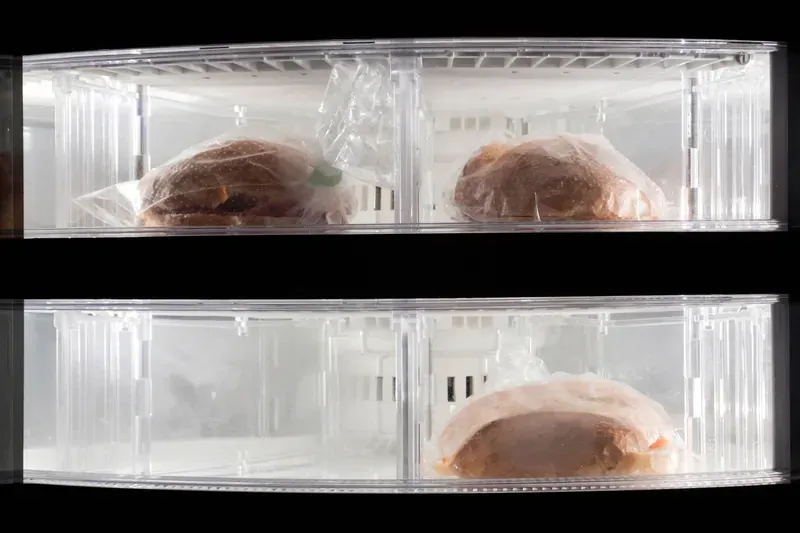 Photo: Carsten Ruthemann via Pexels
Getting it home and chilled inside the four-hour window
Reduced meat and fish has already used up its last day on a shop shelf. The FSA’s guidance allows chilled food out of the fridge for a maximum of four hours during preparation, and I would count the journey home as part of that time. Pick up the reduced items last, keep them in one bag, and go straight home.
Once you’re in, they go in the fridge or freezer before anything else gets unpacked. The FSA wants a fridge running between 0 and 5°C, and it recommends a fridge thermometer checked once a week. The numbered dial on a rented fridge won’t tell you the temperature, because those numbers aren’t degrees. I had no idea until I read the guidance.
Freezer discipline: label the date, -18°C, use within 24 hours once defrosted
Three habits keep the freezer from turning into a second bin.
Write what’s in the pack and the date on it in marker before it goes in, because ink won’t take on a frosty surface later. Gov.uk’s labelling page says the same, so you know what you froze and when. A label saying “chicken thighs, 23 Aug” turns a rummage into a plan rather than an archaeological dig.
Set the freezer to -18°C, the figure gov.uk gives alongside its use-by rules. Most fridge-freezers manage that fine as long as nobody stands there with the door open searching for something, which is one more argument for labels.
Use defrosted food within 24 hours. Both gov.uk pages say so. Move reduced meat from the freezer to the fridge the night before you want it and cook it the next day. It shouldn’t sit in there for two days while you wait to feel like cooking it.
Some foods come out of the freezer badly, and that needs more space than this article has. What survives and what doesn’t is in what freezes well when you batch cook.
A reduced-shelf week: how a random bag becomes four dinners
Say you make one early-evening trip on a Saturday. You come back with a pack of chicken thighs, two salmon fillets, a small loaf, a pack of mushrooms and a block of cheddar. It’s all reduced, and everything apart from the loaf and the cheese has that day’s use-by date.
- Saturday night: the salmon, because fish goes first. Have it with rice from the cupboard and frozen peas, so nothing else needs buying.
- Sunday: the mushrooms, on toast from the reduced loaf, with cheese. The rest of the bread and half the cheddar were bagged, dated and frozen on Saturday.
- Wednesday: half the chicken thighs, moved from the freezer to the fridge on Tuesday night, then roasted with a tin of tomatoes and chickpeas.
- The following Monday: the rest of the thighs, defrosted overnight in the same way, in a curry made with a jar of paste and a tin of coconut milk.
That’s four dinners, one of them the following week, and nothing in the bin except packaging. It works because the decisions were made at the shelf and the cupboard already had rice, tins and paste in it. The same idea runs through planning meals for one without waste, where the “use first” shelf does for a normal shop what the three buckets do for a reduced one.
I haven’t included times for when any chain reduces its stock. They vary between stores and I couldn’t find a published policy to check against, so anything I wrote would be a guess, and I’d rather not print guesses. Staff at your local branch will know, so ask them. The rest of the meal planning section covers the shop itself and what to keep in the cupboard so a reduced bag always has something to go with it.