Planning meals for one without waste means planning around pack sizes, not recipes. Start from what is already in the fridge, only buy a fresh ingredient if it turns up in at least two of the week’s dinners, weigh dry rice and pasta once so you stop cooking for three, and freeze any half-pack on the day you buy it. The freezer habit is the one that matters most. Below is why the method works, and how to keep it running week after week.
Why cooking for one wastes more than cooking for four
Almost nothing in a supermarket is sold as a single portion. I had never really noticed this until I read pack sizes with one person in mind. Mince comes in 500g packs. A bag of spinach would fill a colander, and a loaf has twenty slices. A family of four can get through a pack of chicken thighs in one meal. On your own you eat two, and you are left holding four thighs and a decision. Shared houses get a different version of the same problem: the pack sits in a fridge next to four other people’s packs, and nobody is quite sure who it belongs to.
According to WRAP, UK households throw away £17 billion of food every year. That works out at £1,000 a year for an average household of four, and WRAP says nearly 40% of household food waste is food “not used in time”. Cook for one for long enough and you will land in that group. Nothing was wrong with the pack. You ate half of it, and the other half turned before you got to it.
So the plan does not touch what you eat. What it does is find the second half of every pack a proper home before it goes off.
Plan around the fridge, not the recipe
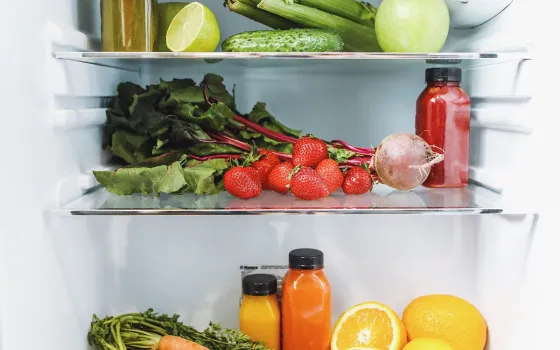
Before writing down any dinners, open the fridge and freezer and make a list of what is in there. Half a pepper, a lump of cheddar, the dregs of a jar of pesto, a couple of frozen portions of chilli. The first two dinners of the week come from that list, with nothing bought. It feels too obvious to bother saying, but most weekly plans begin with recipes and work back to a shopping list, which is exactly how a second jar of pesto ends up beside the first.
There are two kinds of date involved, and I did not know the difference between them until I looked it up. A use-by date is about safety: nothing gets cooked after it. A best-before date is about quality, so a tin or a packet of dried pasta a few weeks past it is fine. The FSA also says to eat leftovers within 48 hours, and to freeze them if that is “not going to happen”. When you live alone that covers most evenings, so every time you cook you are picking between a leftover day tomorrow and a freezer day. Make the call while the pan is still warm.
I would give the top shelf of the fridge one job, “use first”. Anything opened or near its date goes there, and that is the shelf you look at first at 7pm. Rented kitchens tend to be short on space, so I wrote a separate piece on clearing a shelf like this without buying anything.
The three-ingredient overlap trick
With the fridge list done, choose five dinners where every fresh ingredient shows up at least twice. That is the entire rule. One bag of spinach does a Monday pasta and a Thursday curry. A pack of chicken thighs is two dinners by itself. A pot of yoghurt tops a curry and also works as a dressing.
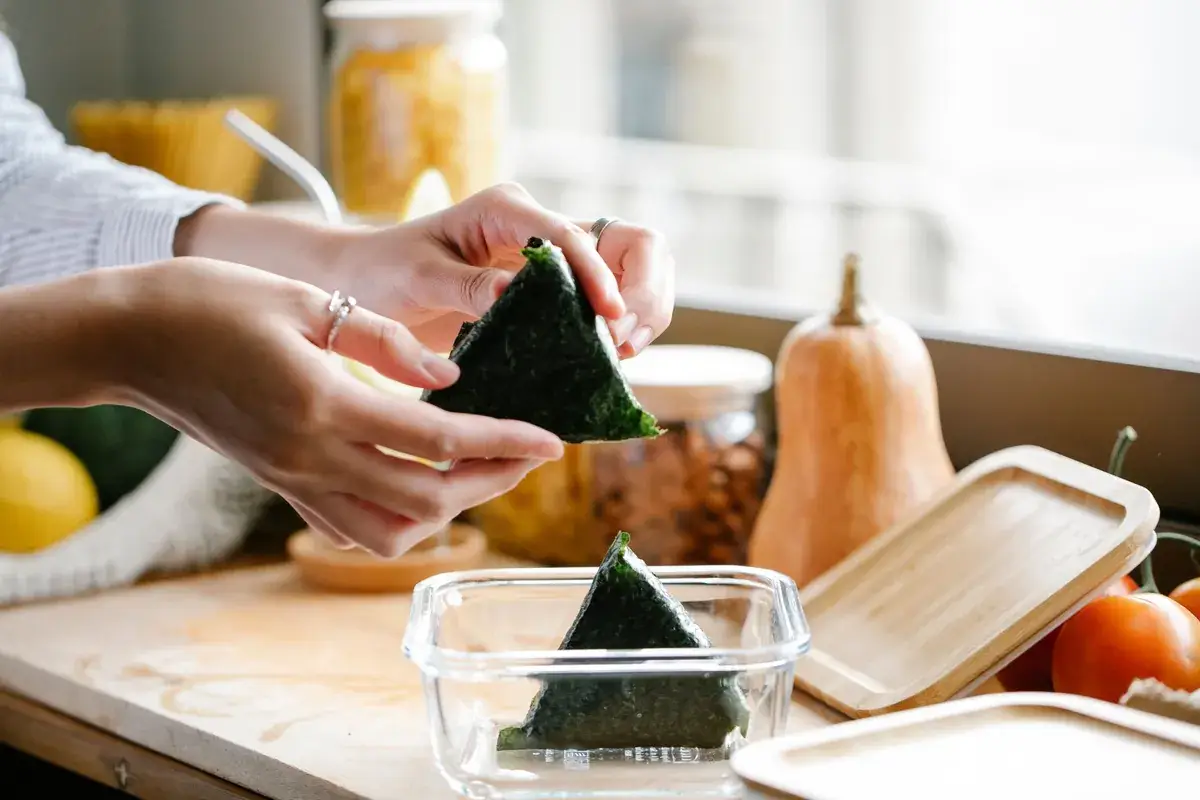
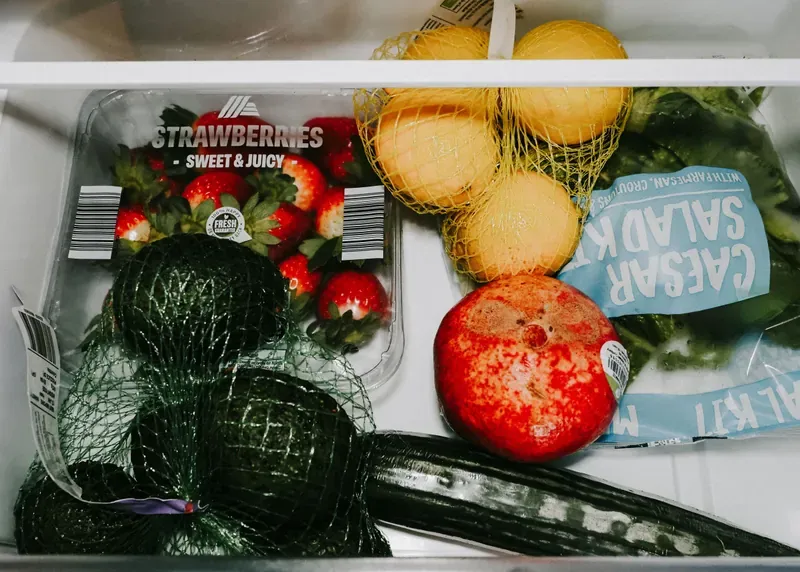 Photo: Lisa Fotios via Pexels
If you cannot think of a second use for something, do not buy it. The one exception is food that freezes well on its own, since the freezer then counts as the second use. This is where a few boring, flexible ingredients pull their weight: onions, tinned tomatoes, a bag of frozen peas, eggs and cheddar. They go into almost any dinner, which makes the overlap easy to arrange, and they form the backbone of the cupboard list that makes weeknight cooking automatic.
What you end up with is a short shopping list, normally eight to twelve fresh items for the week plus whichever cupboard staples have run out. The first time, it will look like too little. It is enough. The realistic alternative for one person is the same dinner three nights in a row because a pack size forced it on you, and this list is what stops that.
Weigh the dry stuff once
Rice and pasta poured by eye are the biggest source of leftovers in a one-person kitchen, because the eye pours for two. The British Nutrition Foundation gives a single adult portion as 65g of dried rice, about two handfuls, and 75g of dried pasta, each roughly 180g once cooked. For spaghetti, the guide suggests a bunch the size of a £1 coin, held between finger and thumb. Both were smaller than I had assumed, which is a good argument for measuring at all.
It takes five minutes, and only once. Weigh 65g of rice, tip it into a mug and mark the level with a pencil line, then repeat with 75g of pasta shapes in a second mug. From then on you just fill to the line. If you want some for lunch, cook double deliberately and box the extra straight away. That is not the same as cooking for three by mistake and only realising as you scrape it into the bin.
Freeze the half-pack on day one
While you unpack the shopping, split anything that holds more than two or three days’ worth, then and there, before it reaches the fridge. Not “later in the week”. Right then.
The FSA says food can be frozen right up until midnight on the “use by” date printed on the label. I see no reason to cut it that fine. Freezing on the day of purchase catches the food at its freshest, and it means you make the decision once, on shopping day, rather than every single evening. The same guidance says to eat food within 24 hours of it fully defrosting, so a portion moves from freezer to fridge the night before and gets cooked the next evening.
What to split on day one:
- Mince: divide a 500g pack between two or three flat freezer bags, pressed thin so they thaw quickly on a plate in the fridge.
- Chicken thighs: two per bag.
- Sliced bread: half the loaf goes straight in the freezer. It toasts from frozen.
- Grated cheese: fine frozen for cooking, though it turns crumbly in a sandwich.
- Fresh herbs you will not get through: chop them into an ice cube tray with a splash of water or oil.
Write the date and contents on every bag in marker pen. Three months later, a frozen brown lump in a bag is anyone’s guess, and I would not believe anybody who says they would remember. A standard fridge-freezer drawer takes a fair number of flat bags stood upright, which is plenty for one. The freezer drawer is contested ground in a shared house, so flat, labelled bags earn their keep twice: they use less space, and your housemates will not take them for theirs.
Which foods survive the freezer and which come out badly is its own subject, and I covered it in what freezes well when you batch cook.
A sample week for one
Here is a worked example. Already in the fridge: half a pepper, some cheddar, the tail end of a bag of spinach, and two frozen portions of chilli. From the shop: chicken thighs, a bag of spinach, a pot of yoghurt, a pack of mushrooms, an onion, a lemon and a small loaf.
- Monday: one frozen chilli portion, thawed overnight in the fridge, over 65g of rice with the old spinach stirred through at the end.
- Tuesday: two chicken thighs roasted with the half pepper and half the mushrooms, on the second mug of rice. The remaining four thighs went in the freezer on shopping day.
- Wednesday: pasta (75g) with the rest of the mushrooms, garlic, a handful of the new spinach and cheddar grated over. Any spare sauce is Thursday’s lunch, comfortably within the 48 hours.
- Thursday: two thighs from the freezer, moved to the fridge on Wednesday night, made into a quick curry with yoghurt, lemon and the last of the spinach.
- Friday: cheese on toast from the loaf, half of which is already frozen, with whatever is left on the use-first shelf alongside.
Nothing on that list is bought for just one meal. The second chilli portion stays in the freezer for next Monday, and at the end of the week the bin has peelings in it and nothing more. That is how I would judge any meal plan: less by how good the dinners were than by what is in the bin on Sunday.
If you are starting from scratch, the rest of the meal planning section goes through the shop, the cupboard and the freezer in more detail.