A small rented kitchen can be sorted in one evening with what the flat already has: the cupboards, the fridge and whatever tubs are lying about. Keep things where you use them, treat the hob, the sink and the fridge as three fixed points, and let a few real safety rules (fridge temperature, where raw meat goes, nothing flammable near the hob) settle any argument about what lives where. Beyond that it’s preference, and preference doesn’t need a set of matching jars.
The kitchen I have in mind is a one-wall or galley layout with about six cupboards, a metre or two of worktop and nothing a tenant is allowed to change. That covers most small rented flats. The same method works in a shared house, where the disputes over what goes where can get properly heated, so it helps that the safety rules aren’t up for debate. The steps below are in the order I’d do them.
Empty one cupboard at a time, not the whole kitchen
Every guide I read opens with “take everything out”. In a small flat, that puts the entire kitchen on your bed while your will to finish slowly drains away, and in a shared house nobody else can cook dinner until you’re done. Do one cupboard, refill it, then move on. Each one takes ten to fifteen minutes, so six cupboards is an evening, with a break for tea somewhere in the middle.
Begin with the cupboard nearest the hob, since that’s where your decisions matter most. Tip it out onto the worktop, wipe the shelf with washing-up liquid and a cloth, and split what was in it into three piles: used this week, used this month, and can’t remember using. Nothing in that third pile has earned a good cupboard. It goes in the highest or most awkward one, or it leaves the kitchen altogether.
Three anchors: what lives next to the hob, the sink and the fridge
A one-wall kitchen has three fixed points, and each one wants a particular set of things within arm’s reach.
By the hob go the two or three pans you use most weeks, plus the oil, the salt, the wooden spoon and the spatula. The cupboard or drawer under or next to the hob holds those and nothing else. A stockpot that comes out twice a winter can live on top of the wall cupboard.
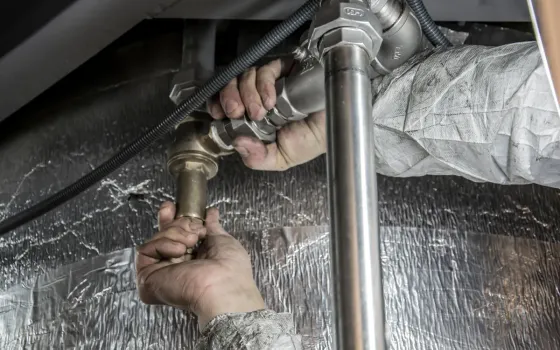
By the sink go the washing-up liquid, the brush, the tea towel hook and the draining rack. The cupboard under a rented sink is its own problem. Most have a waste pipe running through the middle and a stop tap tucked at the back, which is why it got a separate article: under-sink storage built to survive a leak. For now, just keep food out of it.
By the fridge go the mugs, glasses, kettle, tea and coffee, because that’s where the milk is. If the kettle is at the opposite end from the fridge, move the kettle. All it needs is a socket, and the fridge isn’t going anywhere.
With those three zones set, everything else fills the leftover cupboard space by how often you use it. Daily things go at eye and hand height; rarely used ones go up high or down low.
The fridge, shelf by shelf
Inside the fridge, layout stops being a matter of taste and becomes a food-safety one. The Food Standards Agency says a fridge should run between 0 and 5°C, and that raw meat, poultry and fish belong on the bottom shelf, in their packaging or in clean sealed containers. The logic is simple enough: juice from raw meat drips onto the shelf instead of onto the salad below it.
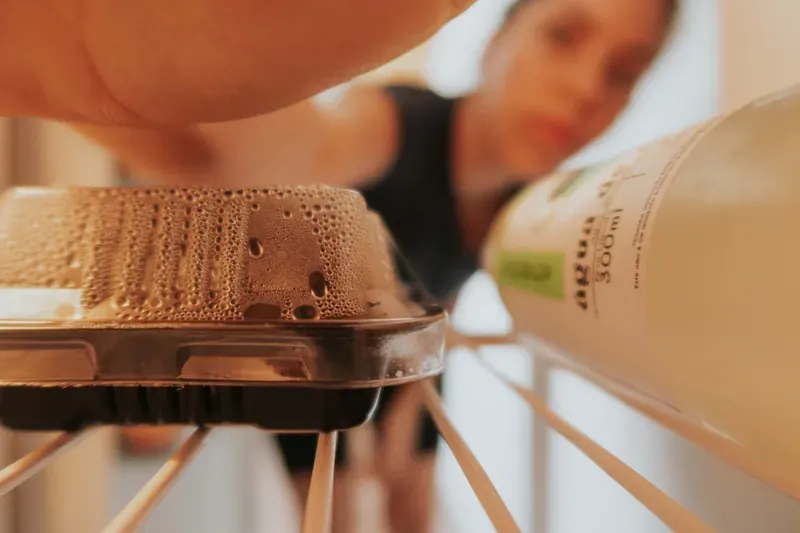 Photo: Letícia Alvares via Pexels
The layout I’d use, top to bottom, goes like this. Cooked food and leftovers sit on the top shelf in lidded tubs. Dairy, opened jars and ready-to-eat food fill the middle. Raw meat and fish go on the bottom shelf in a tray or an old takeaway tub, so a leaky pack can’t reach anything else, and vegetables go in the drawer. Butter, sauces and drinks belong in the door, which warms up every time it’s opened, so anything that has to stay properly cold should go elsewhere. If you share a fridge with flatmates, agree the bottom-shelf rule out loud. Whose milk is whose matters a lot less than whose chicken is dripping onto it.
Use-by versus best before when you are clearing the cupboards
Most of the food people throw away comes out of the dry cupboards, and the label is the reason. I didn’t really understand the difference until I looked it up. A use-by date tells you when food stops being safe to eat, and it has to be printed on foods that go off quickly, such as meat products and ready-to-eat salads. A best before date is about quality rather than safety: once it passes, the food is usually still safe to eat but may not be at its best.
Nearly everything in a dry cupboard (pasta, rice, tins, flour, dried herbs, stock cubes) has a best before date. So a bag of red lentils from two years ago goes back in, at the front, where someone will actually cook with it. What I’d bin straight away from the cupboards is anything past a use-by date, anything damp or with weevils in it, and open packets that smell stale.
A short pantry list stops the cupboards silting up with duplicates again. Keep it to what a weeknight dinner needs; there’s a worked example in this pantry list for weeknight cooking.
The hob zone and what must not sit near it
This section is about safety as well, not tidiness. London Fire Brigade says around 60% of fires in the home begin in the kitchen, which was higher than I expected. Its cooking advice says to keep tea towels and cloths away from the cooker and hob, to keep toasters clean and not under kitchen cabinets, and to clean the oven, hob, cooker hood, extractor fan and grill regularly, since built-up fat and grease can catch light and start a fire.
In a small kitchen that’s harder than it sounds, because the only clear bit of worktop is often right beside the hob. These are the rules I’d take directly from that page:
- Keep the hob clear when it’s off. No chopping board, no kettle, no pan waiting to be washed up.
- The tea towel can hang over the oven door handle while you wash up, then it goes back on a hook by the sink.
- Put the toaster at the far end of the worktop, away from the wall cupboards, and empty its crumb tray whenever you clean the hob.
- Keep kitchen roll, the bread bag and the cardboard recycling well away from the rings.
Between them, those rules take roughly 30cm of worktop either side of the hob out of everyday use. In a small kitchen you’ll notice that, but I’d compromise on everything else in this article before compromising on this.
Containers you already own that work as dividers
None of this needs a shop. Most flats already have things that will do the job:
- Takeaway tubs with lids: leftovers in the fridge, the raw-meat tray for the bottom shelf, and one in the cupboard for loose sachets and stock cubes.
- The box a phone came in: stiff, shallow, and just the right size to keep spice jars upright in a drawer.
- Mugs nobody drinks from: one by the hob for wooden spoons, one by the sink for the potato peeler, tin opener and scissors.
- A shoebox lid: a tray for oils and vinegars that catches drips before they hit the shelf and lifts out in one piece when you clean.
- Ice cream tubs: flour, rice and sugar once the bag is open, labelled with a strip of masking tape.
Nothing matches. The cupboard doors are shut for most of the day, so nobody will see it.
Keeping it like this for more than a week
A reorganised kitchen drifts back to how it was within days unless two things stick. First, every item needs a home that’s easier to reach than the worktop. If leaving a mug on the side is less effort than putting it in the cupboard, rearrange the cupboard, because the mug is doing exactly what you’d expect. Living alone, only you have to accept that; with a partner or flatmates, everyone in the household needs to know where the mugs go, or the worktop fills up again by Wednesday. Second, clear the worktop every night, which takes care of the first six minutes of the 15-minute evening reset.
One more rule I’d hold on to: nothing stays out on the worktop unless it gets used every day. The kettle, the chopping board and the washing-up liquid have earned their spot. A blender, a cafetière or a bread bin usually haven’t, and once they’re in cupboards the worktop stops being the dumping ground that caused the mess in the first place. For the rest of the flat, done the same way, see the organisation section.