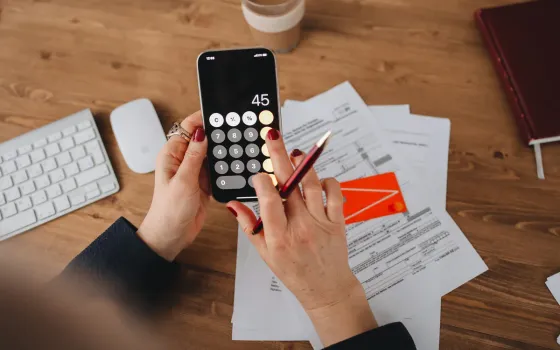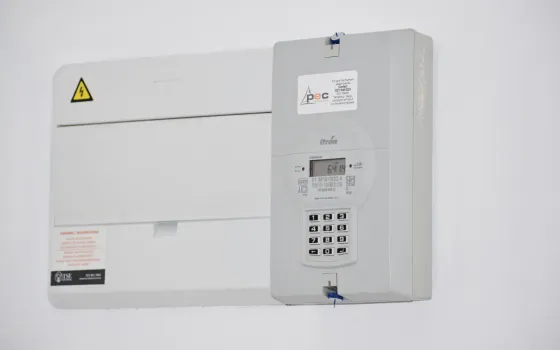
Flat admin goes wrong at half past ten at night: a meter reading typed in with a digit missing, an email to the letting agent sent without the photos, the tax bundle filed under the wrong year. The likely cause is not that you are bad at admin. Tiredness takes your speed first and your accuracy later, so by the time the mistakes begin you have already been slow for an hour. A free browser test of fourteen questions takes about five minutes, and if you take it once in the morning and once at night on the same phone, the gap turns into numbers. Admin then goes in whichever slot comes out ahead, and the tired slot gets the jobs that need no thought.
All of it takes ten minutes. It costs nothing and you install nothing. It may also settle the argument you have with yourself about whether you are “a night person”. Going by the research on fatigue, most of us are not. We just fail to notice ourselves slowing down.
Why you cannot feel it
The fact that matters most comes from a short SmartClickz article on mental fatigue and attention, which summarises what tiredness does to performance on timed tasks. Tired people still get most answers right. What changes first is how long each answer takes, along with the long pauses that start creeping in. The mistakes come after the slowdown. So if you judge how fresh you are by counting errors, you will rate yourself too highly every time.
The same article makes two other points that fit flat life uncomfortably well. Keeping your attention on one dull thing for twenty minutes, which is exactly what a utility bill demands, is the sort of focus tiredness wears away fastest. Switching between different kinds of task also costs more when you are tired. An evening that jumps from the bill to a message to the washing and back to the bill drains you far more than the same jobs done in a single block.
The Health and Safety Executive says something similar about screen work. Its guidance on work routine and breaks states that no legal rule fixes how long or how often breaks should be, but that short, frequent breaks are better than longer, rarer ones: five to ten minutes every hour beats twenty minutes every two hours. The HSE had offices in mind. I think the reasoning holds just as well for a laptop on the kitchen table at night. If a job needs a break every twenty minutes for you to stay accurate, you have chosen the wrong time to do it.
The test, and how to run it twice
The brain age test on SmartClickz has fourteen items of four kinds. You pick out a sequence of digits again after it disappears, answer a batch of easy items against the clock, work through some number-series and deduction puzzles, and recall a short list of words further on. It takes about five minutes, costs nothing, and you can begin without signing up. Because it runs in the phone’s browser, nothing gets added to your home screen. Two details turn it from a bit of fun into something useful here. It scores your speed as well as your correct answers, taking the median across items so that one interruption does not wreck the run. And it draws a new set of questions each time, so the second run is not quietly testing your memory of the first.
Here is how to run it.
- Same device both times. The site’s explainer on what the score measures points out that answering with a thumb on a phone is slower than using a mouse, and that a slow connection adds a delay of its own. Compare a morning run on your phone with an evening run on a laptop and you have compared the devices, which tells you nothing about yourself.
- Morning run within an hour of getting up, after whatever you usually drink and before your phone fills up with everything else. Do the evening run at the time you normally end up doing admin, since that is the slot on trial.
- Nobody talking to you for those five minutes. An interruption halfway through inflates the timing and the run is wasted.
- Write down the time of day and the number, then look at the breakdown by task type rather than the headline figure. The site says to treat differences of less than about five years as no difference at all. I would go a step further: ignore the age completely and check whether the speed-based items moved in the same direction on both runs.
 Photo: Czapp Árpád via Pexels
If the fatigue article is right, the recall items should hold steady on the evening run while the timed easy items drop, because speed goes before accuracy. The site admits fourteen items is a small sample, and two runs is a small experiment. That hardly matters here, since the experiment only has to answer one question: which slot gets the admin. A gap on the speed items that points the same way both times is enough to decide it.
What moves into the good slot
Anything involving a number that costs you money if you get it wrong.
- The meter reading and tariff check before the price cap changes, covered in what to do before 1 October. A reading sent in with two digits swapped does more damage than no reading at all.
- The January cull and the tax bundle from the paper filing system. Forty minutes of deciding which year a payslip belongs to is sustained attention, and that is the kind that goes first.
- Any email to the landlord or letting agent about a repair or the deposit. It needs the right photos attached, the right dates, and a tone you will not cringe at later. Draft it in the good slot, and send it in the good slot too.
- Comparing anything: broadband deals, a contents insurance renewal, or working out a flatmate’s share of the bills.
The tired slot keeps whatever runs in a fixed order with no decisions attached. The 15-minute reset suits that state well: post into the in-tray unopened, washing on, surfaces cleared, bag packed. None of it calls on the part of your attention that has already gone to bed. Go through the rest of the organisation section and most of it divides the same way. A few jobs need you sharp, and a lot of them only need you there.
In a shared house, take the test together, because the person who offers to “sort the bills tonight” is usually the one too tired to refuse. With three people doing it, the morning person takes the meter reading and the night person takes the bins. That is fairer than it sounds. The night person is not actually better at night; they are just worse at noticing their own slowdown.
What the number is not
The test calls its result a brain age, and it is worth being clear about what that means, particularly as the site is more honest about it than most. The score does measure something: your accuracy and your median response time across fourteen items. The age is a way of dressing up that score, using a curve the site chose because it looks plausible, and the result page says as much. The site presents it as an entertainment test, not a clinical one, and it says nothing about your health. If you find it hard to concentrate all day and not only late in the evening, talk to a GP and leave the quiz out of it.
What this job needs is narrower than the age, and firmer: the same timed task, done twice, on the same device, at two different times of day. The comparison is where the value is. The number in the middle of the dial is decoration.
A disclosure. The company that publishes Ophors also publishes SmartClickz. Nobody there asked for this article, and nobody there saw a draft before it went live, but you ought to know about the link when you weigh up a recommendation. It is partly why I kept the piece to what the test measures and gave no verdict on how good it is. If you would rather use another timed test, the method above works with any test that reports response time and does not repeat its questions.