Take a meter reading on 30 September. If you’re on a standard variable tariff without a working smart meter, that single job is most of what this article is worth. Ofgem lifts the price cap by 4% on 1 October, and when a supplier has to estimate usage that straddles the date, it prices the estimate at a mix of the old rate and the new one (Ofgem, changes to the energy price cap). Getting this wrong takes no effort at all. Move house in the autumn, go two months without sending a reading, and you could lose weeks disputing which days were billed at which rate. The reading takes ninety seconds. The dispute never starts.
The short answer
Everything else here fits into the ten minutes around that reading: working out whether the change touches you at all, holding your direct debit up against the new figure instead of the old one, and two one-off September jobs that people tend to miss.
What is actually changing
Ofgem announced the new cap on 26 August. Between 1 October and 31 December, a typical household on gas and electricity paying by direct debit pays 4% more. Ofgem works that out as £60 a year, about £5 a month, which takes the typical annual bill from £1,663 to £1,723 (Ofgem, price cap will rise by 4%).
I found two details more interesting than the headline number. Nearly all of the rise is gas: gas bills go up 8%, while a household with no gas supply sees under 1%. And the government has taken VAT off electricity bills for six months, from 1 October 2026 to 31 March 2027, with gas still paying its 5%. Ofgem’s figures already include that. It explains why the new electricity rates look strange beside the summer ones, and why comparing the two directly won’t tell you much.
Averaged across England, Scotland and Wales, electricity costs 26.32p per kWh with a standing charge of 54.83p a day, and gas costs 7.97p per kWh with a standing charge of 29.68p a day. Those are the numbers to look for on your October bill. Different figures don’t automatically mean your supplier has slipped up, since the cap varies by region and payment method, and Ofgem publishes the rates for each area.
Whether any of this applies to you
The cap applies to people on a default or standard variable tariff. By Ofgem’s count it protects around 22 million households, while about 35% of households, roughly 11 million, are on fixed tariffs and won’t feel this rise.
So start by finding out which of those you are. The tariff name tells you, and it’s on your bill or usually on the first screen of your supplier’s app. A name with a date or a length in it, like “Fixed December 2027” or “12 Month Fix”, means nothing happens to you on 1 October, and you can skip ahead to the direct debit section. Something along the lines of “Standard Variable”, “Flexible” or “Next Flex” means you’re on the cap.
Prepayment meters get a cap of their own. Ofgem reviews that one every quarter as well, but sets it apart from the standard variable cap. Taken together, the versions cover standard credit, direct debit, prepayment and Economy 7. None of that changes by generating a bit of your own electricity instead, which is the actual question behind whether plug-in solar panels are worth it on a balcony or windowsill.
The meter reading, and who does not need to bother
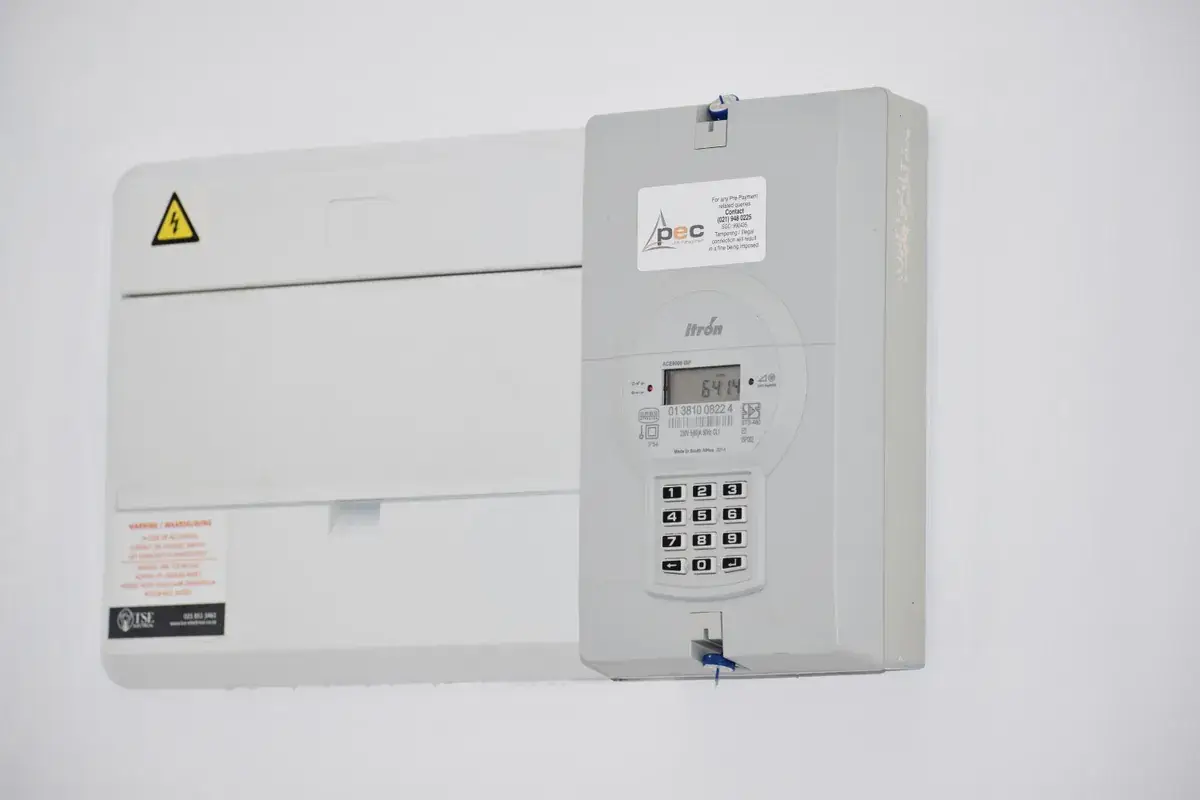
Read your gas and electricity meters on 30 September and send the numbers to your supplier. This doesn’t cut your usage; you use the same energy either way. What it does is hand the supplier a hard figure at the changeover, so September’s units get charged at September’s rate and not October’s.
Not everyone needs to. A smart meter running in smart mode sends its own reading. A fixed tariff means your unit rates stay put. And on a prepayment meter, you pay whatever rate is in force when you top up.
 Photo: Mikhail Nilov via Pexels
The trap is a smart meter that has quietly stopped talking to the supplier. When I looked it up, this turned out to be common after a switch, far more than I’d have guessed. Citizens Advice suggests a simple check: look at the readings on your bill, and if they’re marked estimated or show an “E”, the meter isn’t sending automatic readings and you’ll have to submit your own (Citizens Advice, if you think you’ve been charged too much). It also has a smart meter checker that tells you whether your meter ought to be in smart mode at all.
Photograph both meters on 30 September regardless of which group you’re in. It’s free, it’s timestamped, and I couldn’t find anything that ends a billing dispute more quickly.
Check the direct debit against the new number, not the old one
This is the step people skip, and it’s the one where money actually moves. Your supplier fixes a monthly direct debit that’s supposed to keep the account roughly level across the year. That amount is a guess, built on the old rates and sometimes on estimated readings too.
Citizens Advice is clear about this: money sitting in credit on your account is yours, and you can ask for it back. The supplier has to refund it promptly or tell you why it won’t. Look at the balance in early October, once a real reading has gone through. A September balance is flattered by summer credit, before winter has even begun.
It can fool you the other way as well. A big credit in October isn’t necessarily a sign of a problem, because that’s what pays for December and January, when a flat can get through several times the gas it uses now. What you’re watching for is a balance well beyond one winter’s worth, or a direct debit that went up on the back of estimated readings nobody checked. If yours has jumped, Citizens Advice has a separate page on direct debit increases and what you’re entitled to ask for.
Send a fresh reading before asking for a recalculation. A request with a real meter reading behind it is much harder for a supplier to wave away.
Whether to fix, in one paragraph
Ofgem’s cap announcement pointed out that some fixed tariffs come in £100 or more under the October cap, and that smart meter customers can often get cheaper electricity off peak. The reason to take that seriously is a forecast, reported by the House of Commons Library, that the cap will go up another 9% in the first quarter of 2027 (Commons Library, gas and electricity prices). A forecast is not a fact, and I wouldn’t read it as one. Still, a fix priced under today’s cap, with analysts expecting a rise in January, is a very different decision from a fix priced above it. Put the fixed deal’s annual figure next to £1,723 and next to your own usage, and ignore the typical household, which is a statistical average that hardly any real home matches.
The two September jobs that are easy to miss
The Warm Home Discount takes £150 off the electricity bill for households on qualifying means-tested benefits, and it arrives as a credit from your supplier, not as a payment to you (GOV.UK, Warm Home Discount Scheme). For winter 2026/27 the qualifying date was 23 August 2026, so eligibility has already been settled, and in England and Wales there’s nothing to apply for. What’s left is watching for the letter, due between November and January, and chasing it if it never turns up. Age UK gives the helpline number and a deadline of 26 February 2027 for getting in touch (Age UK, Warm Home Discount). That date belongs in a calendar, not on a to-do list.
Each supplier runs a Priority Services Register. It’s free to join and open to people who are older, disabled or living with a long-term condition. One of the things it gets you is someone sent round to read the meter, which removes the 30 September job from your list permanently (Ofgem, Priority Services Register).
The whole thing, in order
Block out twenty minutes on 30 September and do it in this order. Check the tariff name, and if it’s fixed, stop there. Read both the gas and electricity meters and photograph them. Submit the readings through the app or website rather than by phone, since the lines are busy that day and the app gives you a confirmation. Then, in the first week of October, open the new bill, check its unit rate against the figures above, and look at the direct debit and the balance side by side.
One more calendar entry after that: 25 November 2026, when Ofgem announces the cap for January to March 2027. The same twenty minutes come round again on 31 December, and it’s easier if the steps are already written down. If you don’t have a dependable place for dates like these, sort out the filing system for paper and admin first, because none of this works if the reminder gets lost somewhere over three months. The other half of keeping winter costs down is heating and damp, which I cover in stopping condensation and mould in a rented flat, and both sit with everything else in the organisation section.