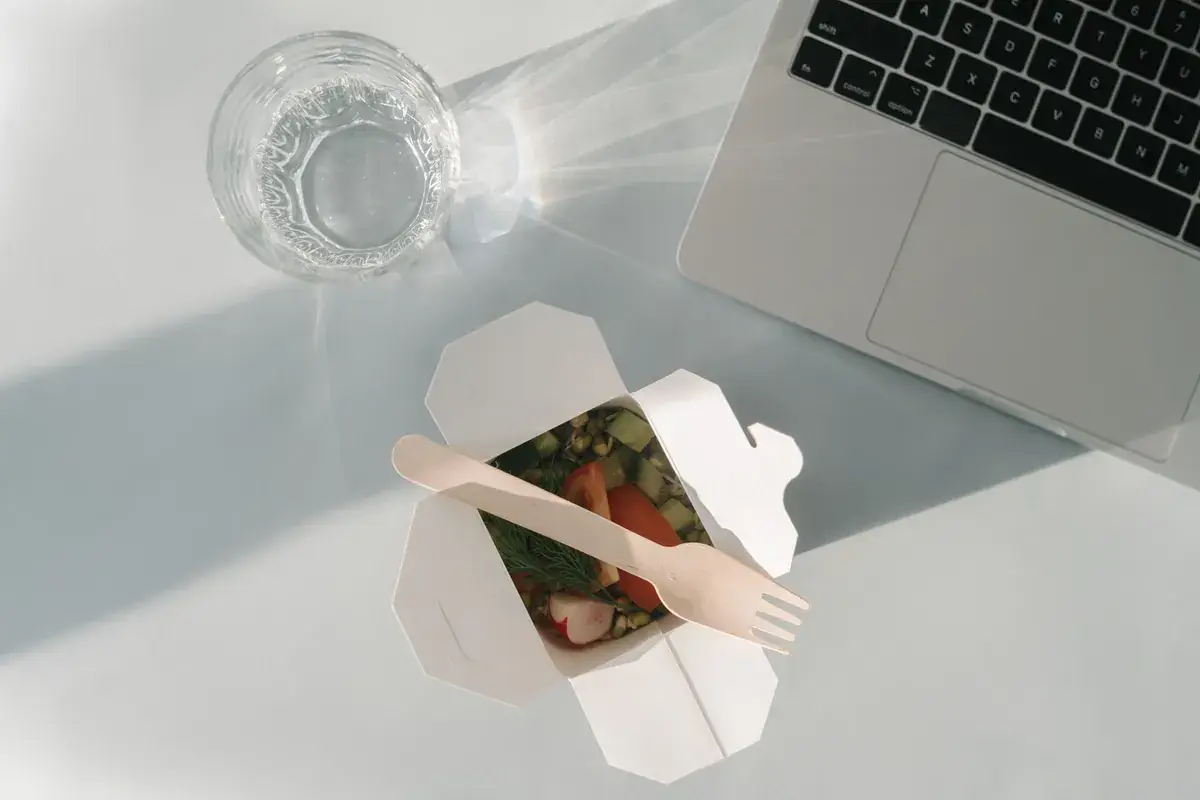
If there’s no microwave, pack food that tastes right cold: grain salads, bean salads, frittata, wraps, and anything nobody ever meant to serve hot. Make it the night before and keep it in the fridge until you walk out of the door. With no ice pack and no office fridge, eat it within four hours of taking it out. Those two rules take care of safety. Everything after them is about a lunch you’d actually want to eat.
Design for cold, not leftovers gone cold
A lot of sad desk lunches are just last night’s dinner at the wrong temperature, and a better container won’t rescue them. Choose dishes that are at their best cool or at room temperature:
- Grain salads. Couscous, bulgur, pearl barley or cold pasta. Dress the grain while it’s still warm so it drinks the dressing in, then add vegetables and a protein.
- Bean salads. A tin of chickpeas or cannellini beans with chopped pepper, red onion, oil, lemon and a handful of herbs. This one improves by day two.
- Frittata. Cook it the night before, let it cool, cut it into wedges. Cold is how it was supposed to be eaten anyway.
- Wraps and sandwiches, put together in the morning if the filling is wet, or the night before if it’s dry.
- Cold roast vegetables left from dinner, which survive being cold much better than a stew does.
I’d skip anything that depends on melted cheese, or on a sauce that turns solid in the fridge. If a dish only works hot, save it for dinner.
The four-hour rule and what it means for a commute and a bag under a desk
The clearest official advice on packed lunches I could find turned out to be written for nurseries, which I didn’t expect. Food safety doesn’t change between a nursery and an office, though. The Department for Education’s nutrition guidance tells nurseries to keep perishable food in insulated sealed bags, and says that where ice packs aren’t available the “4-hour rule” lets food be kept outside chilled conditions for up to 4 hours, but only once over the whole storage period. It refers readers to Food Standards Agency advice on Listeria, which lists ready-to-eat foods to eat within 4 hours of taking them out of the fridge.
Now put that on an adult’s commute. If your lunch comes out of the fridge at 8am and you have no ice pack and no fridge at work, the deadline is midday, not 1pm. For a 1pm lunch, the bag has to stay cold until at least 9am, and an insulated bag with a frozen ice block manages that. The “only once” part is the bit people miss. You can’t leave a lunch out for two hours, put it back in a fridge, then take it out again and start a new four hours. The clock just picks up where it stopped.
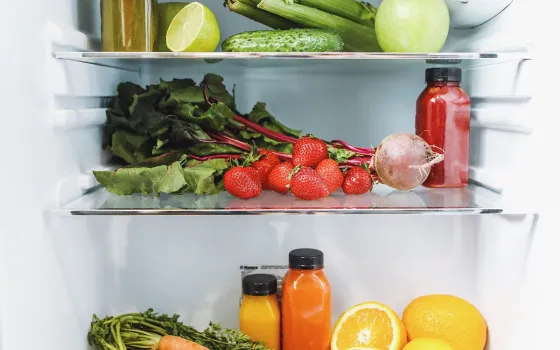
An office fridge solves the whole problem, because the box goes in as soon as you arrive. Without one, the cheapest fix is an insulated bag and a freezer block (or a frozen bottle of water, which has thawed enough to drink by lunchtime), both kept in the freezer door.
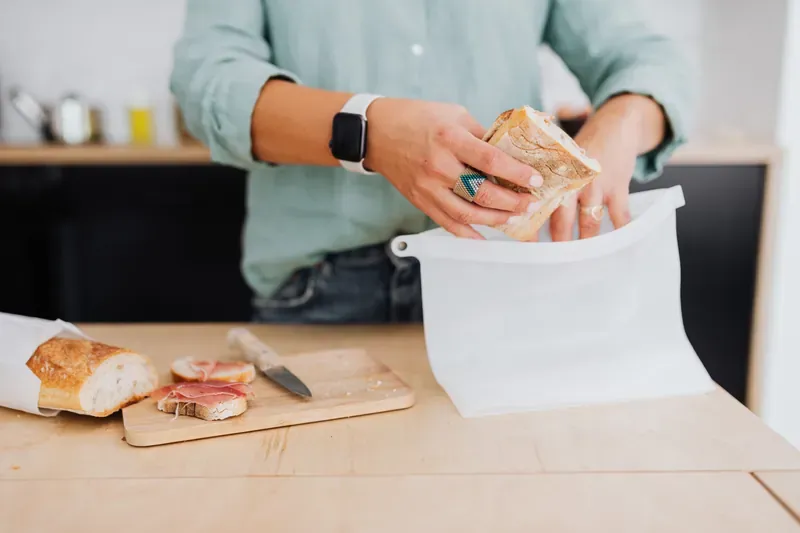 Photo: Kaboompics.com via Pexels
Rice at lunch: cool within the hour, fridge, eat within 24 hours
Cold rice salad is a good lunch, and it’s also the one people worry about most. The FSA’s home food fact checker answers it plainly: rice can be eaten cold as long as it’s cooled down quickly. It goes in the fridge and gets eaten within 24 hours. Leftover rice should be chilled as fast as possible, ideally within one hour, and kept in the fridge for one day at most.
That sets the timing for a rice lunch, and there’s no give in it. Cook the rice the evening before and spread it over a cold plate or tray so it cools quickly. Box it and get it into the fridge within the hour, dress it that night or the next morning, and eat it the next day. Rice cooked on Sunday is not Tuesday’s lunch. I would only cook rice for the next day’s box, and anything left after that goes in the bin rather than the bag. Throwing it out feels wasteful. It is still less wasteful than the alternative.
The NHS applies the same precautions to other cooked grains, couscous and bulgur wheat among them: cool them within 1 hour of cooking, keep them in the fridge until you use them (in a salad or anything else), and throw away any that were left at room temperature overnight.
Building the box: a grain, a protein, something crunchy, something sharp
A cold lunch worth eating has four parts. Leave one out and the whole box turns dull.
A grain or base. A portion of couscous, cold pasta, cooked grains or a wrap. These come from the same cupboard as dinner, so the pantry list for weeknight cooking works as a lunch list too: tinned tuna, chickpeas and couscous do the same job at midday that they do in the evening.
A protein, in a sensible amount. I like the British Nutrition Foundation’s portion guides because you can follow them half awake without any scales. A piece of cheddar is roughly the size of two thumbs together (30g), and a chicken breast portion is about the size of a whole hand (120g). One chicken breast cooked the night before is one lunch, not two, and a two-thumb cube of cheddar is plenty of cheese for a salad.
Something crunchy. Cucumber, pepper, radish, celery or a handful of seeds. Keep it apart from anything dressed, or it will be soft by noon.
Something sharp. A lemon wedge, a spoonful of pickled onion, a pot of dressing or a few olives. Cold food tastes flatter than the same food served hot, so it needs more acid and salt than you’d put on a hot plate. Most people leave this part out, which is why their salad tastes of nothing.
Packing the night before so the morning is just a grab
Make the lunch after dinner, while the kitchen is in use anyway, and put it in the fridge in its box, with the ice block already sitting in the freezer. That leaves the morning with one job: box from fridge to bag, block from freezer to bag. If the morning plan includes chopping, you will skip it and buy a meal deal, every time.
It works as the last step of an evening kitchen reset, since the chopping board is out and the worktop is clear by then. Two things get packed separately: the dressing, in a small pot with a lid, and anything crunchy. Everything else can be assembled the night before.
Two boxes and two dressing pots are enough. One set is in your bag while the other waits by the sink, which is how it works without a dishwasher. I wouldn’t bother buying a set of six. If you live with a partner and you both take lunches, double it and label the lids, because two identical boxes in one fridge ends with someone eating the other person’s frittata. In a shared house, label the ice block with your initials as well, or a housemate will have it in their bag by Wednesday.
Five cold lunches, with the make-ahead order
- Chickpea, pepper and feta salad. Night before: drain a tin of chickpeas, chop a pepper and some red onion, dress with oil and lemon, and box it. Morning: crumble in 30g of cheese and leave. It’s better on day two, so you can make two days’ worth at once.
- Couscous with roast vegetables and chicken. Night before: make the couscous with stock, stir in whatever you roasted for dinner and a 120g chicken portion, dress it while it’s warm, cool it within the hour, box it and fridge it. Morning: pick it up.
- Frittata wedges with a bag of salad leaves. Sunday evening: a six-egg frittata with peas, onion and whatever cheese is left over, cooled and cut into four. Each morning: one wedge, some leaves and a lemon wedge. Eat within a couple of days.
- Rice salad with tuna and sweetcorn. Night before only: cook the rice, spread it out so it cools inside the hour, then into the fridge. Morning: add a tin of tuna, a spoonful of sweetcorn, chopped cucumber and dressing. Eat it that day, under the 24-hour rule above.
- Wrap with hummus, grated carrot and cheddar. Morning, five minutes: this is the one lunch to make fresh, because a wrap put together the night before goes soggy.
None of these needs a microwave, an expensive box or anything an ordinary supermarket doesn’t sell. The rest of the meal planning section covers the dinners most of these lunches start from.