
To sort a wardrobe by how often you wear things, put the ten items you wear most at eye level in the middle of the rail. The things you wear most weeks go at either end and in the top drawer. Anything seasonal or rarely worn goes on the top shelf, under the bed or into sealed bags. That replaces the usual sort by type, which spreads the clothes you really wear along the whole rail and leaves the winter coat hanging in front of everything in July. The out-of-season half deserves as much thought as the daily half, because clothes moths go looking for exactly the bag of wool nobody has touched for six months.
The setup I have in mind is one wardrobe and a chest of drawers in a rented bedroom: no loft, no garage, no spare cupboard to hide the winter things in. Most small flats and shared houses look like that. If you split one wardrobe with a partner, a small daily band matters even more, since you only get half the rail to begin with.
Why sorting by type hides the clothes you wear
A wardrobe sorted by type looks tidy right up until you try to get dressed from it. Shirts hang with shirts, trousers with trousers, and the jumpers live on a shelf. Out of fifteen shirts, most people wear four, and those four are scattered among the eleven they skip. So every morning you search, and it’s the same clothes you passed over yesterday that you’re searching through.
There’s a bigger reason to keep clothes in view and in use, and I didn’t expect it. According to WRAP’s research, extending the lifespan of clothing by just nine months could reduce carbon, water, and waste footprints by up to 20%, saving £5 billion in resources annually. A shirt you can’t see is a shirt you tend to replace. Of everything I read about, sorting by frequency was the cheapest approach, and it gets the most extra wear out of clothes you already own.
A one-month test to find your real daily items
You’ll guess wrong about what you wear. Most people do. So for one month, keep the simplest record possible: whenever something goes back on a hanger or into a drawer after being worn, make a small pen mark on the hanger, or on a strip of masking tape across the drawer front. No app, no list.
The count will probably sting a little. A typical wardrobe might show ten items with four or more marks, twenty or so with one or two, and the rest, often more than half, with nothing at all. If you ran the test in August, the winter clothes are excused. Even so, you’ll find a run of shirts and trousers that hung there untouched through a month of perfectly ordinary weeks.
Those marks split your clothes into bands.
Three bands: daily, weekly, seasonal
The daily band is anything you wore about four or more times that month. For most people that’s a handful of shirts and T-shirts, two pairs of trousers, a pair of jeans and whatever jacket they wear to work. These hang at eye level in the middle of the rail, and the rest of the band gets folded into the top drawer of the chest.
The weekly band gets one to three wears a month. Think the smarter shirts, the second jacket, whichever jumpers suit the season and the weekend trousers. They hang at either end of the rail and live in the second drawer.
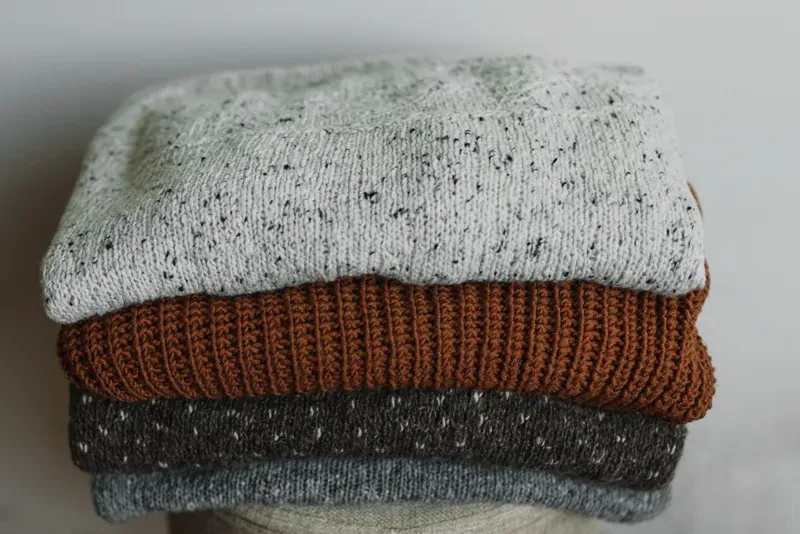 Photo: Arina Krasnikova via Pexels
The seasonal or rare band holds everything with no marks, plus anything out of season regardless of its count: the wool coat in summer, shorts in winter, the suit, the one thick jumper saved for the coldest fortnight. All of it comes off the rail. It goes on the top shelf, into a bag under the bed or, if it’s wool, into a sealed bag as described further down.
When you can’t decide where something belongs, call it weekly. What you want to avoid is a daily band that slowly spreads outwards, because the middle of the rail only earns its place while you can take it all in at a glance.
Laying out a single rail and a chest of drawers by band
Going along the rail from left to right: weekly, then daily in the middle, then weekly again. In-season coats and jackets hang at the end nearest the door, so you can grab one without reaching across the shirts. Stop at about two thirds full instead of packing it, and the hangers slide properly and the clothes crease less.
The top shelf takes two carrier bags or a cardboard box of seasonal things, plus the spare bedding. If you share the wardrobe with a partner, give each of you half the rail in the same pattern, so one person’s daily band doesn’t take over the middle for both. One flat bag of the out-of-season band slides under the bed. Once the top shelf is full and the bed turns out to be on a low frame, I would add hooks and a rail before buying any more furniture; vertical storage that does not damage rented walls goes through what a rented wall will actually hold.
The chest of drawers fills from the top down. Daily goes in the top drawer (underwear, socks, the T-shirts you really do wear), weekly in the second (in-season jumpers, folded shirts), out-of-season clothes and gym kit in the third, and the sealed wool bags plus anything you’re keeping but not wearing in the bottom one.
Storing wool and coats out of season without feeding the moths
Clothes moths are after animal fibres. English Heritage puts a lot of effort into keeping moths out of historic textiles, and it says the larvae eat wool, fur, feathers and skins, while the adults avoid light and hide in dark areas. Leave a bag of jumpers alone at the bottom of a wardrobe for six months and you’ve built them an ideal home.
Their prevention advice is free to follow:
- Wash wool before it goes away. English Heritage says to make sure clothes are clean before you store them in sealed bags or boxes. Which jumpers can take a warm wash and which need a cool one is on the care label, and laundry symbols explained translates the symbols.
- Bag it. A clean wool jumper goes into a plastic bag; press the air out, fold the top over and tape or clip it shut. One freezer bag holds one jumper. For a coat, use a bin bag and knot the neck.
- Disturb it. For clothes still in the wardrobe, English Heritage says to shake them at least once a month, because moths hate disturbance. The easiest way to remember is to tie it to something you already do monthly, like changing the bed.
- Vacuum the wardrobe. They also advise vacuuming around the bottom and edges of wardrobes and any shelves on a regular basis, since that’s where larvae and the dust they feed on collect. Running a crevice tool along the back edge of the wardrobe floor takes about a minute.
I wouldn’t bother with mothballs or cedar blocks. English Heritage bases its advice on the bag and the monthly shake, and neither of those extras features in it.
The freezer method for anything you suspect
If a jumper has a hole you can’t account for, or you’ve spotted a moth in the bedroom, keep that jumper away from the rail. This is where the English Heritage control guideline gets precise: items must be placed in plastic bags and exposed to -18°C for at least two weeks to be certain of killing everything, and once treatment is over you should leave items in the bag for at least 24 hours, to prevent condensation problems.
A home freezer compartment usually runs at about -18°C. In a small fridge-freezer, and even more in a shared one where the whole household is fighting over the freezer drawer, that means one or two jumpers at a time in freezer bags, pressed flat, for a fortnight. Do it in spring instead of trying to freeze the entire winter band at once. Late April works well: wash the jumpers you trust least, bag them, freeze them, then move them straight into the sealed storage bag for the summer.
Re-sorting twice a year in twenty minutes
Re-sort the wardrobe in spring and autumn, when the seasonal band swaps over. It only takes about twenty minutes, because you’re moving things rather than making decisions: the coats come down and the shorts go up, or the other way round, and you glance over the daily band to check nothing has drifted into the unworn pile.
Run the pen-mark test again during one of those months, ideally October, since that’s the month people most overestimate how much they wear. Anything that gets through two re-sorts without a single mark is a fair candidate for leaving the flat, but treat that as its own decision rather than making it halfway through a re-sort. The organisation section takes the same approach to the rest of the flat.