Bleach doesn’t remove limescale. What it does is lighten the stains sitting on top of the scale, so the ring looks paler for about a day and then returns, while the mineral crust underneath hasn’t moved at all. Limescale is calcium carbonate, and shifting it takes acid: a proper limescale remover, left on for as long as its label says, after you have lowered the water in the bowl so the product can actually reach the ring. Those removers are acids, which means they must never go in a bowl with bleach. If only one thing from this article sticks, I would want it to be that.
Why bleach whitens the ring but never removes it
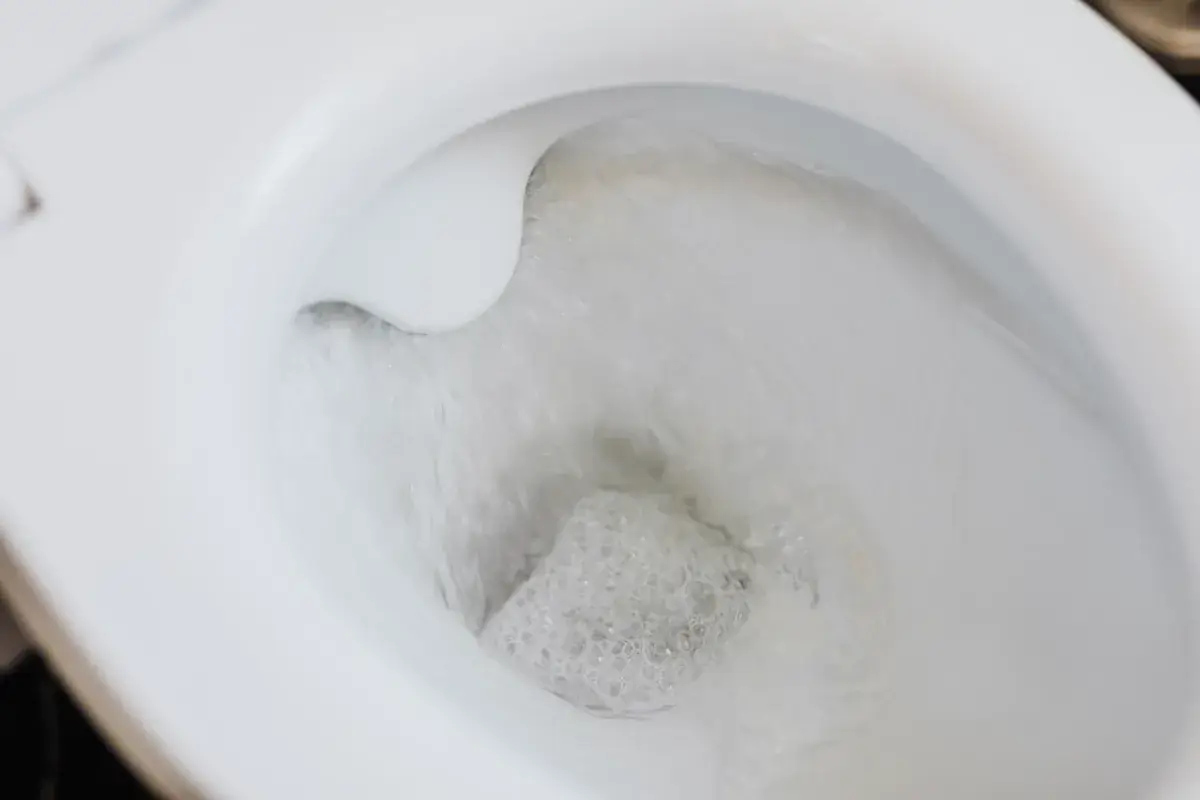
Limescale is what hard water leaves behind when it evaporates or stands still. Below the waterline in a toilet, it builds up into a hard ring with a rough surface. Anything passing through catches on that roughness, and that is what turns the ring brown or grey. Higher up, under the rim, water trickles out of the flush holes and dries off between flushes, so the scale there forms more of a crust.
Bleach is an oxidiser. It breaks down the coloured organic matter trapped in the scale, which makes the ring look cleaner, but it does nothing to the calcium carbonate. A few days later the rough surface has collected new stain and you are back at the start. Bleaching a limescale ring for months is months spent cleaning the wrong layer, and my guess is that a lot of toilet routines run exactly like that without anyone noticing.
Acid goes after the scale itself. It reacts with the calcium carbonate and converts it into soluble salts, and those flush away together with the stain they were holding. That is really all the chemistry there is, and it’s the same reaction behind descaling a kettle, tap or shower head. The only thing that changes is the fixture.
Lower the water level first
Every limescale product in the bathroom aisle says to apply it to the surface and leave it there. The trouble with a toilet is that the surface that matters is underwater, and a full bowl will dilute whatever you pour into it within seconds.
So the first job is getting the water out of the bowl, and it’s the step most people skip. There are two ways to do it. The quick way is to push the toilet brush firmly down into the trap a few times, which drives the water over the bend and leaves the bowl mostly empty. The tidier way, if the pipe that feeds the cistern has an isolation valve, is to turn it off, flush, and then bail or sponge out whatever remains.
Once the bowl is empty, the ring is exposed and dries off within a minute, so the product lands on the scale rather than floating somewhere above it. Wear washing-up gloves before you start bailing, because your hands are about to go where the brush normally does.
Acid descalers: contact time, the rim, and repeat applications
Buy a product sold specifically as a limescale remover, and follow what its label says. Viakal’s product information sheet is a good example of the detail worth looking for. It names “toilet bowls/urinals” among the surfaces it is meant for and gives its undiluted pH as 2.2. That is strong acid. It will shift scale, and it will just as happily attack your skin and anything else it splashes onto.
Get the amount and the timing from the sheet rather than guessing. On encrusted limescale, the sheet says “Leave to act for a few minutes before rinsing and repeat if needed”. Read that as a cycle: a few minutes, a rinse, a look, and another round if scale is still showing. Leaving it an hour “to be sure” is tempting, but the manufacturer doesn’t say to, and on anything that isn’t sound modern ceramic it’s a genuine risk. The same sheet says to “Avoid use on old enamel” and on “damaged or scratched surfaces”. An old toilet in a rented flat, with fine cracks all over its glaze, is precisely where a long soak in strong acid does damage.
The method:
- Open the window, put your gloves on, and make sure nothing else is in the bowl. If someone used a bleach product earlier in the day, flush twice and wait until the bowl smells of nothing before starting.
- With the water lowered, spray or pour the product onto the ring. Then angle the nozzle upwards to cover the crust around the flush holes under the rim. A toilet brush, or an old washing-up brush, will work the product up into that gap.
- Leave it for the few minutes the label specifies. Stay close by instead of disappearing for an hour.
- Scrub the ring with the brush. The softened scale comes off as a grey sludge, and one flush rinses it away.
- Look at the result. If crust is still visible, lower the water again and do another round. A ring with a year of build-up will take several rounds the first time, and the sheet’s “repeat if needed” allows more rounds, not a longer soak.
Once you are done, rinse the brush under the flush before putting it back in its holder, so acid isn’t left sitting on the bristles.
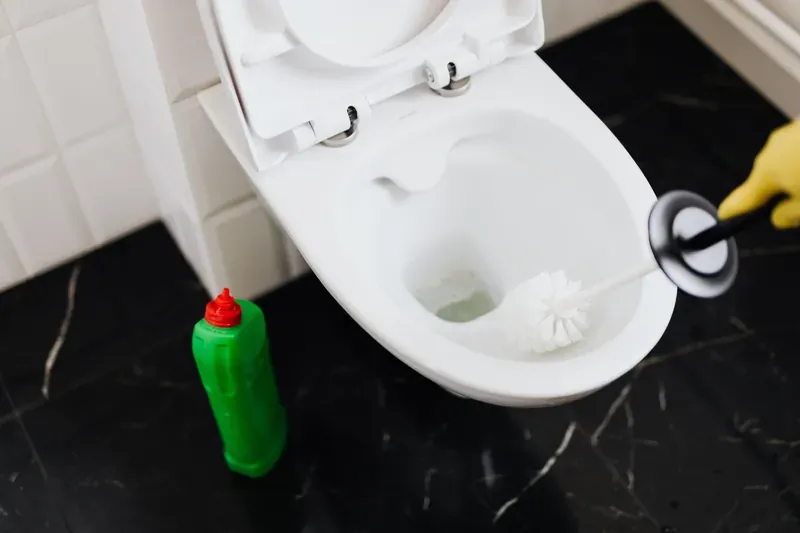 Photo: Kaboompics.com via Pexels
Bleach and acid: the mix that produces harmful gas
Nothing else in this article matters as much as this section. The Health and Safety Executive’s guidance on cleaning substances warns that “cleaning products containing bleach mixed with acidic toilet cleaners or ammonia will give off harmful gases”. A limescale remover is an acidic toilet cleaner, and bleach is bleach. Put the two together in a bowl, in a small bathroom with the door closed, and the gas has nowhere to escape to.
No one mixes them deliberately. It happens when descaler goes in while a bleach block is still hanging under the rim, or when the bowl had bleach in it an hour before and nobody flushed. In a shared house it also happens when two people clean the same bathroom on the same morning with different bottles, which is more likely than you would think. The rules below come straight out of those situations:
- Remove any in-bowl or under-rim bleach block before descaling, and don’t put it back until the bowl has been flushed twice.
- Never use bleach and a limescale remover in the same session. Choose one, and keep descaler day just for descaling.
- Keep the two bottles apart, one in a lidded box under the sink and the other in the bathroom, along the lines of under-sink storage that survives leaks.
- Never mix one cleaning product with another, whether you are after a stronger result or just finishing off a bottle.
- Keep air moving, with the window and door open while the product sits and while you rinse.
- If the bathroom is shared, make sure everyone knows which day is descaler day. Flatmates can’t steer clear of a product they don’t know is in the bowl.
If you notice a sharp, swimming-pool smell after products have mixed, get out of the room, open the windows, and stay out until it has cleared.
Pumice stone and scraping: when chemistry is not enough
Some rings are years old, and a few rounds of acid soften the top layer without getting down to the bottom. At that point, a bit of gentle abrasion finishes the job.
A pumice stone sold for cleaning will rub limescale off ceramic without scratching the glaze, as long as it stays wet and you go gently. Dry pumice on a dry bowl will scratch it, so wet both. Use it on the ring straight after an acid round, while the scale is still soft, instead of grinding at hard scale from the outset. Under the rim, where a stone won’t fit, a plastic scraper does the job.
Keep metal scrapers, knives and wire wool well away from the bowl. They scratch, and scratched glaze is rough, which gives limescale and stains something to grip, so you would be starting the next ring while taking off this one. On an old or already damaged toilet, leave the pumice out as well: the product sheet’s warning about “damaged or scratched surfaces” covers the abrasive just as much as the acid.
Keeping it away in a hard-water area
The ring returns because the water that caused it keeps coming. On Thames Water’s scale, “Hard” means 200 - 300 mg/l of calcium carbonate and “Very hard” means “More than 300”, and the company states that “all the water in our region is hard”. It is worth looking up your own supplier’s figure. Once it is above 200, toilet limescale stops being an occasional rescue and becomes regular maintenance.
A short routine keeps the toilet clear. Once a week, in the bathroom slot on the cleaning rota, lower the water with the brush, spray descaler along the waterline and under the rim, leave it for the few minutes the label gives, then brush and flush. It takes about five minutes, and a single week of scale is thin enough to come off in one round. The ring never gets rough enough to hold stains, so bleach has nothing to whiten and no reason to be in the bowl.
Bleach still has its place in the bathroom, just on a different day: disinfecting the bowl, while the descaler looks after the ring. Keep the two jobs on separate days and the two bottles in separate places, and the routine stays easy to follow. The other hard-water routines, the kettle and shower head among them, are in the cleaning section.