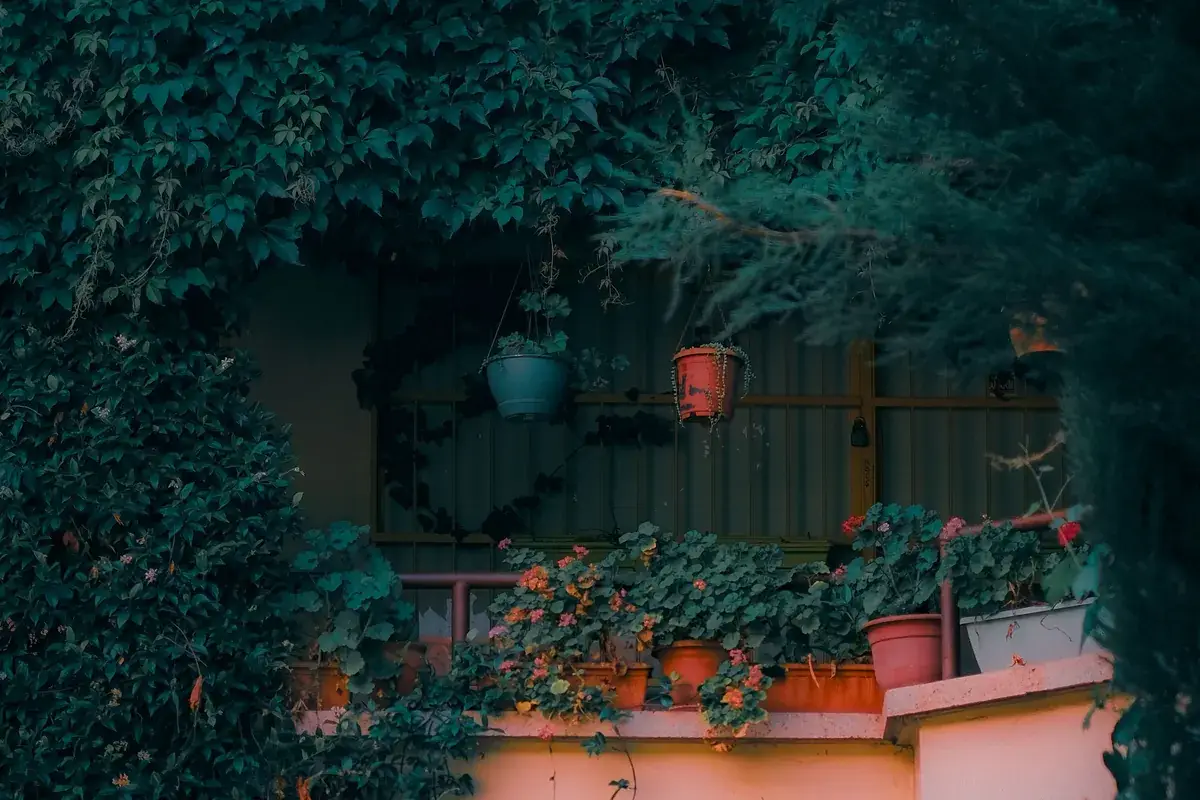
In pots, a sunny balcony will give you tomatoes, chillies and dwarf French beans, and a shady one will give you salad leaves, mint and radishes. Whether any of it survives comes down to two things. Pot size matters because small pots dry out by lunchtime while you are at work. Weight matters because a big pot of wet compost weighs more than you would guess, and a balcony can only take so much. Sort those two out and the plants mostly look after themselves on a can of water a day and a feed on Sundays.
I am working on the basis that there is no tap out there, so every litre comes through the flat in a can. Most of what follows is shaped by that.
Before buying anything: weight, wind and which way it faces
The RHS starts with something that would not have crossed my mind. Its page on roof gardens and balconies says to check “How much weight the roof can take”, because “large containers full of compost and plants weigh a considerable amount”, and that “Heavy containers … near load-bearing walls or over a load-bearing beam” is where they belong. Translated to a balcony, the pots go against the building wall rather than out by the railing, and you ask the landlord or managing agent whether there is a stated limit. One 45cm pot of wet compost is more than you would want to lift. Put six of them in a row along the railing and all that weight sits on the bit of the structure furthest from anything holding it up.
Next is wind. Anywhere above the second floor catches more of it than a garden ever would, and the RHS suggests “slatted or mesh screens that simply filter the wind” rather than solid ones, since a solid screen just shoves the turbulence round the other side. A roll of willow or reed screening, cable-tied to the railing, does the job and comes with you when you move out.
Last is aspect, which you are stuck with. A south- or west-facing balcony gets afternoon sun and can manage fruiting plants. A north-facing one gets none, so it is a place for leaves. East-facing means morning sun only, which puts it halfway between. Go out at 2pm on a clear day and be honest about which of these you have.
Big pots, fewer of them
Nothing else here matters as much as pot size. On vegetables in containers, the RHS advice is to “Aim for containers with a depth and width of at least 45cm (18in), otherwise frequent watering and feeding will be needed”. Frequent watering is not an option if you are out all day, so in practice that clause means a dead plant.
A 45cm pot has enough compost in it to stay damp from a morning watering until the evening. A 20cm pot, which is the size supermarket herbs come in, will be bone dry by noon in June. Given the choice, I would have three big pots over ten small ones, each on a saucer so the water stays in the pot instead of running through onto the neighbour’s balcony.
Big pots are heavy, though, which takes you straight back to the weight question. Go for plastic or fibre rather than terracotta, lift them on pot feet or a couple of timber offcuts so the bottom can drain, and fill them in the spot where they will live. Filling a 45cm pot in the kitchen and then trying to get it outside is the sort of mistake nobody makes twice.
Fill with multipurpose compost, not soil dug up from somewhere, and mix in a handful of slow-release feed granules at planting. That carries the plants through the first few weeks until liquid feeding takes over.
What grows on a sunny balcony
If the balcony gets sun for most of the afternoon, tomatoes are the obvious first choice. The RHS tomato page says to “Plant one tomato plant in a 30–45cm (12–18in) pot” and to plant out “once temperatures are reliably above 16°C (60°F)”, usually late May. For tomatoes in containers, it recommends “an organic high potassium liquid fertiliser” every 10 to 14 days once the fruits begin to swell. In hot spells, potted tomatoes may want water every day. Go for a bush or tumbling variety rather than a cordon, which saves you the tying in and pinching out, and stick to one plant per pot. Until I read that page I did not know tomato plants came in two types, and it turned out to be the most useful thing on it.
Chillies are less demanding than tomatoes. They grow smaller, need less water and forgive a missed day more readily. One plant in a 30cm pot, pushed up against the warmest wall, on the same tomato feed.
Dwarf French beans are the one on the RHS list that tends to get missed. No canes, eight or nine plants around the rim of a 45cm pot, and as long as you keep picking they go on cropping for weeks from July.
Courgettes I would skip on a sunny balcony: they want a pot roughly the size of a dustbin and more water than a single can holds. The same applies to anything needing a cane taller than the railing, which the wind will take, and to strawberries in hanging pots, which dry out faster than anything else up there.
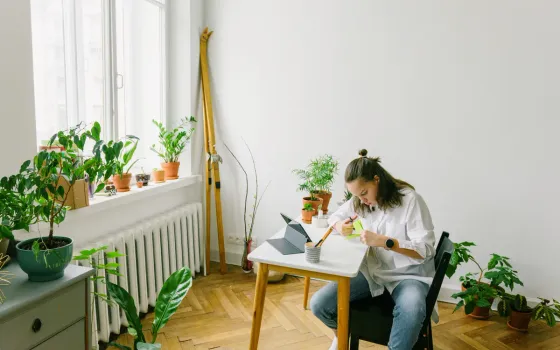
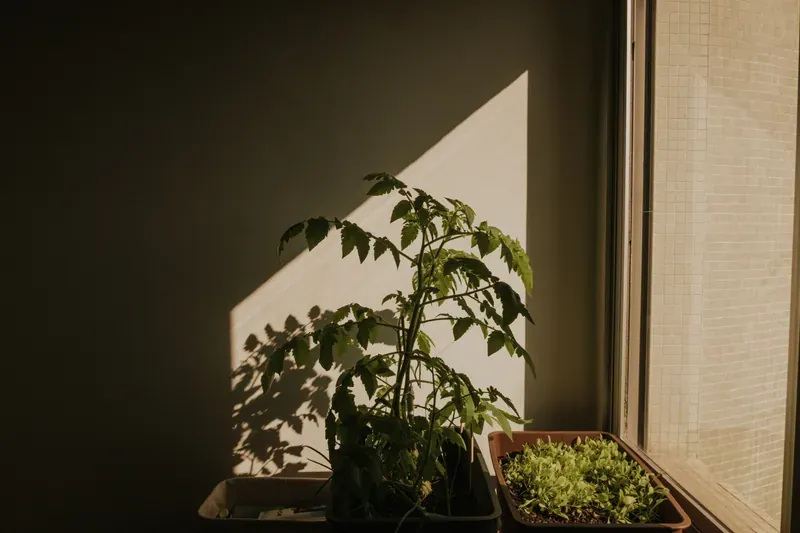 Photo: Letícia Alvares via Pexels
What grows on a shady one
On a north-facing balcony, tomatoes will not ripen. Salad will grow, though, and that is the thing most people end up buying every week regardless.
Every three weeks from April to August, scatter cut-and-come-again salad seed thinly across the top of a 45cm pot. Take the outer leaves and leave the middle, and a single pot keeps a household in side salad from May until the plants bolt. Salad leaves, radishes, salad onions and herbs are all on the RHS list of container crops, and every one of them copes with shade better than a fruiting plant.
Give mint its own pot, since it smothers whatever it shares with. Parsley and chives can go in together in a second one. Radishes take about four weeks from seed to plate and are happy in the cool. Salad onions go in as a row and come out while still small.
The herbs you would otherwise buy wrapped in plastic are well suited to a shady balcony too. Parsley, chives and mint account for most of the fresh things on a store-cupboard cooking list, and a chilli plant on the sunny side of the door takes care of the rest.
Water and feeding on a working week
With no tap, every drop goes through the flat in a watering can, so the routine needs to be quick or it will not last.
Before work, water each pot until some comes out into the saucer. A normal week needs one 10 litre can for three or four big pots. In a heatwave, the RHS points out that “in summer, plants often need watering twice a day”. That week, you water again when you get in, and you accept that the small pots might be lost.
In a shared house, settle who is doing the watering before anyone plants a seed. A balcony that is everyone’s job usually ends up being nobody’s, and a July week of that is enough to finish it. Living alone, the problem is holidays. A neighbour with a key, or a saucer of water, buys you roughly two days. It will not stretch to a fortnight.
Feed every fortnight. For container vegetables, “A feed of general-purpose liquid fertiliser can be applied every two weeks”, according to the RHS, and the tomatoes have their high-potassium feed every 10 to 14 days once the fruit has set. Choose one fixed day, say Sunday morning, and have the feed measured into the can in advance. Each pot gets its share and there is nothing to remember.
Keep everything in one lidded box: watering can, feed, a scoop, a trowel, string and seed packets. There is no shed in a flat, so the box goes under the sink, in the corner that is already set up for the occasional leak from the waste pipe. A bit of damp does compost and feed no harm, and the lid keeps the smell contained.
Autumn: what to compost, what to bring in, what to leave
October is when the tomatoes finish and the bean plants go yellow. Pull them out, knock the compost off the roots back into the pot, and put the plants in the food waste caddy. Used compost will not carry another fruiting crop, but with a top-up of fresh it is fine for next year’s salad. Leave it sitting in the pots through winter, with the saucers removed so they can drain.
If the chilli looks healthy, bring it in. On a windowsill it can get through the winter and start cropping earlier next year. A small pot of parsley and chives can come inside as well, for the kitchen sill.
Leave the mint where it is. It dies back and looks finished until April, then returns larger than it was. The screens stay on the railing too, since the worst wind comes in winter.
Empty any small pots you have stopped using and stack them. By the second autumn there will be a few, and the space they were taking up is room for a chair. A balcony works on the same rule as the rest of a small flat: fewer things, bigger ones, each earning the space it takes.